Benefits of Residential Spray Foam Insulation for Energy Efficiency and Comfort in Kalispell, MT
admin-wegnerinsulation
April 27th, 2026
Spray foam insulation is one of the most effective ways for homeowners in Kalispell, MT, to reduce energy waste, lower heating bills, and maintain consistent indoor comfort through the region’s long, cold winters and short, warm summers. Because Kalispell sits in IECC Climate Zone 5B, a heating-dominated region where winter temperatures regularly drop below zero, the insulation choices homeowners make directly impact how hard their HVAC systems work and how much they spend on utilities each month. The right insulation strategy depends on factors like budget, the specific areas being insulated, moisture concerns, and whether the home is new construction or a retrofit. What follows is a practical breakdown of why spray foam performs differently from traditional materials, how it addresses the specific demands of a Flathead Valley climate, and what homeowners should consider before investing. For a complete overview, explore residential spray foam insulation in Kalispell, MT and other energy-efficient insulation solutions.
TLDR / Key Takeaways
Kalispell, MT, falls in Climate Zone 5B, requiring a minimum of R-49 in attics and R-20 with R-5 continuous insulation in above-grade walls to meet current energy code standards.
Spray foam insulation delivers both thermal resistance (R-value) and air sealing in a single application, which traditional insulation materials like fiberglass and cellulose cannot achieve on their own.
The EPA estimates homeowners can save an average of 15% on heating and cooling costs by properly air sealing and insulating their homes.
As much as 40% of a building’s energy loss is attributed to air infiltration through gaps, cracks, and penetrations that spray foam can effectively seal.
Closed-cell spray foam offers a higher R-value per inch (R-6 to R-7) and acts as a moisture barrier, while open-cell spray foam provides R-3.5 per inch and better sound dampening at a lower cost.
HVAC sizing can potentially be reduced by up to 35% in homes insulated with spray foam due to the reduced heating and cooling load.
Typical return on investment for spray foam insulation ranges from 3 to 7 years, depending on the scope of the project and existing energy costs.
Why Spray Foam Outperforms Traditional Insulation in Cold Climates
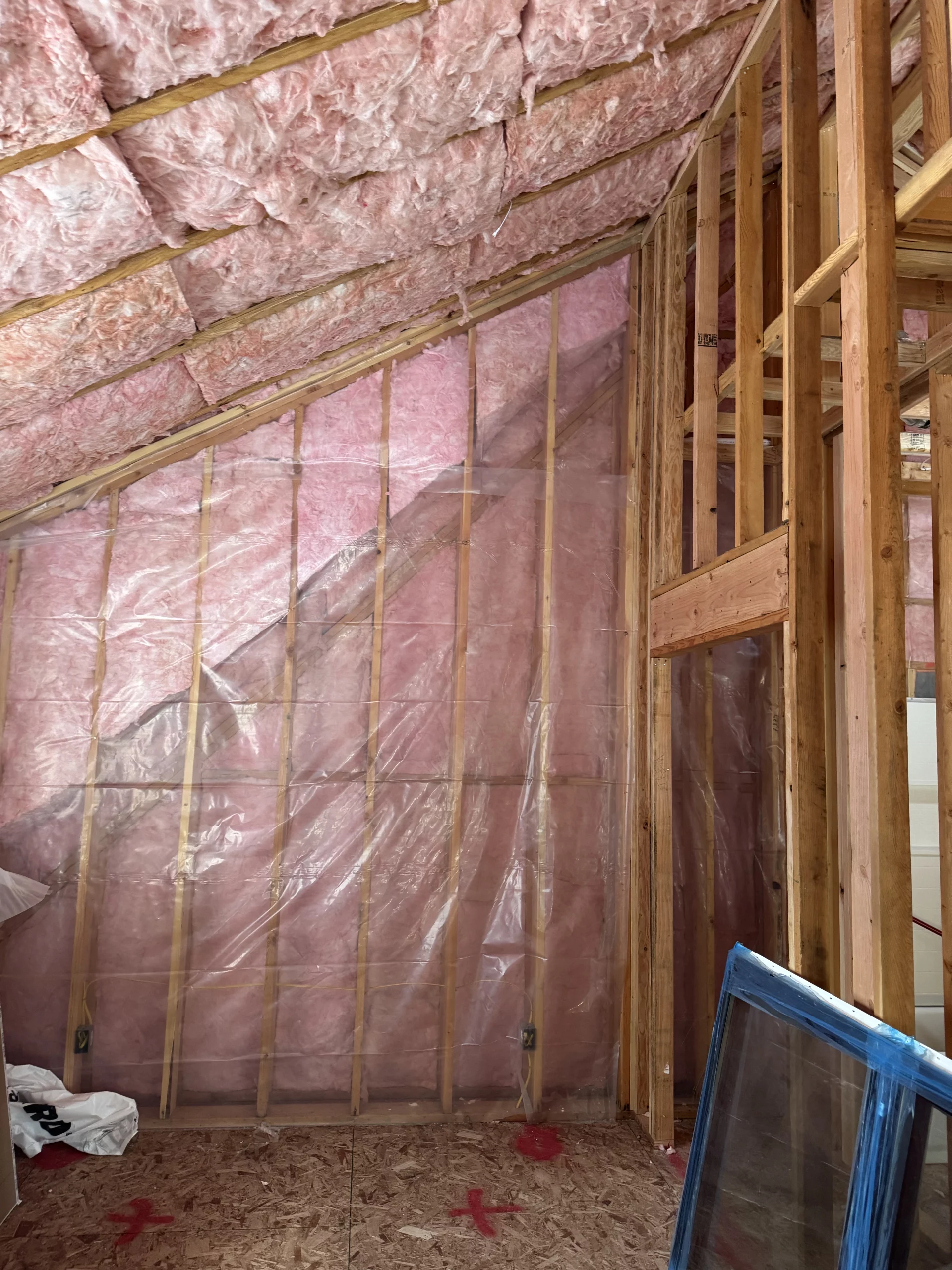
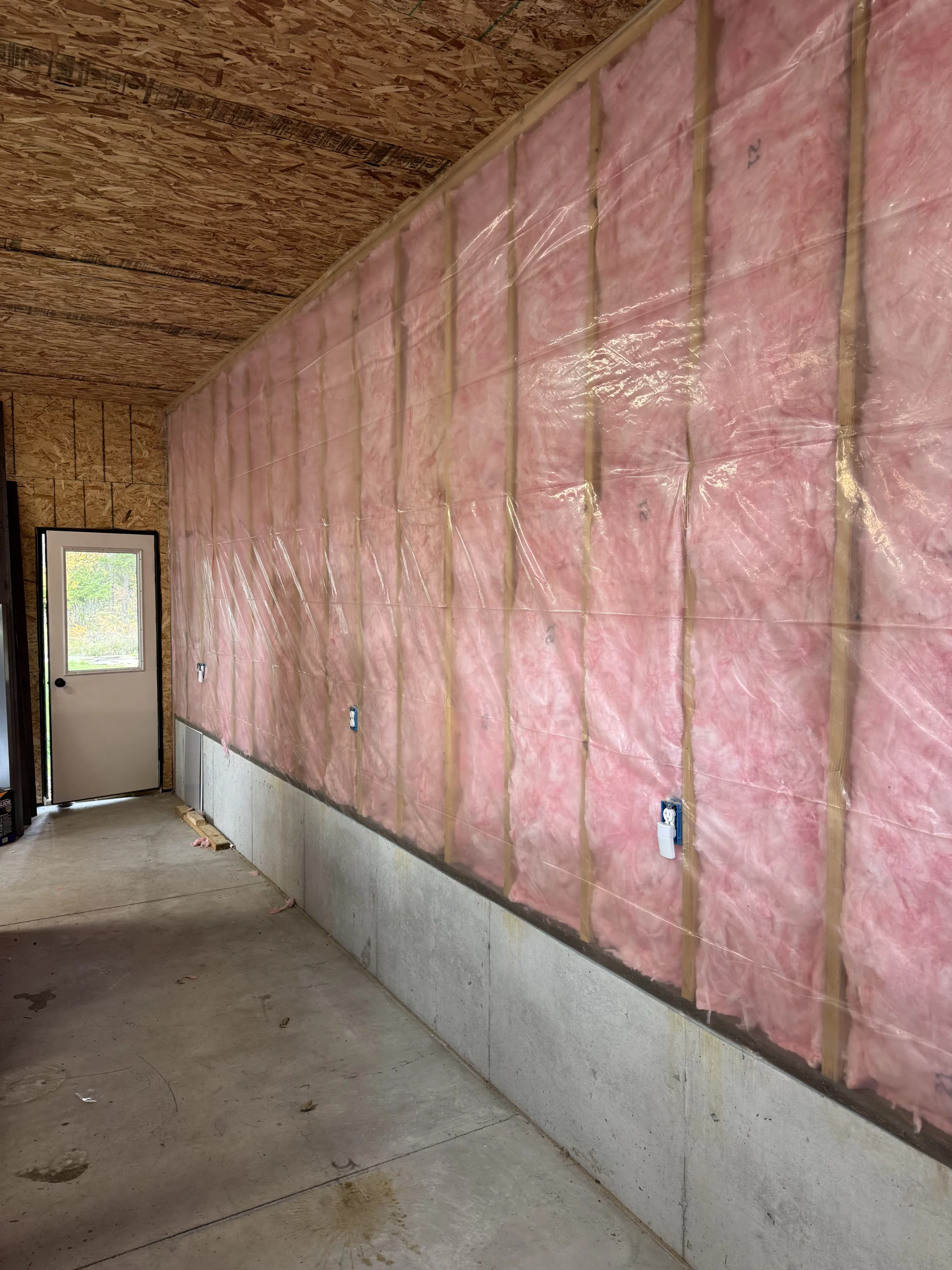
Most homeowners in Kalispell are familiar with fiberglass batts and blown-in cellulose, which have been standard insulation materials for decades. These materials resist conductive heat flow, which is what the R-value measures. According to the U.S. Department of Energy, R-value depends on the type of insulation, its thickness, and its density. Fiberglass and cellulose work well in ideal conditions, but they leave gaps around studs, joists, pipes, wiring, and other penetrations. These gaps create pathways for air to move in and out of the home, which the R-value rating alone does not account for.
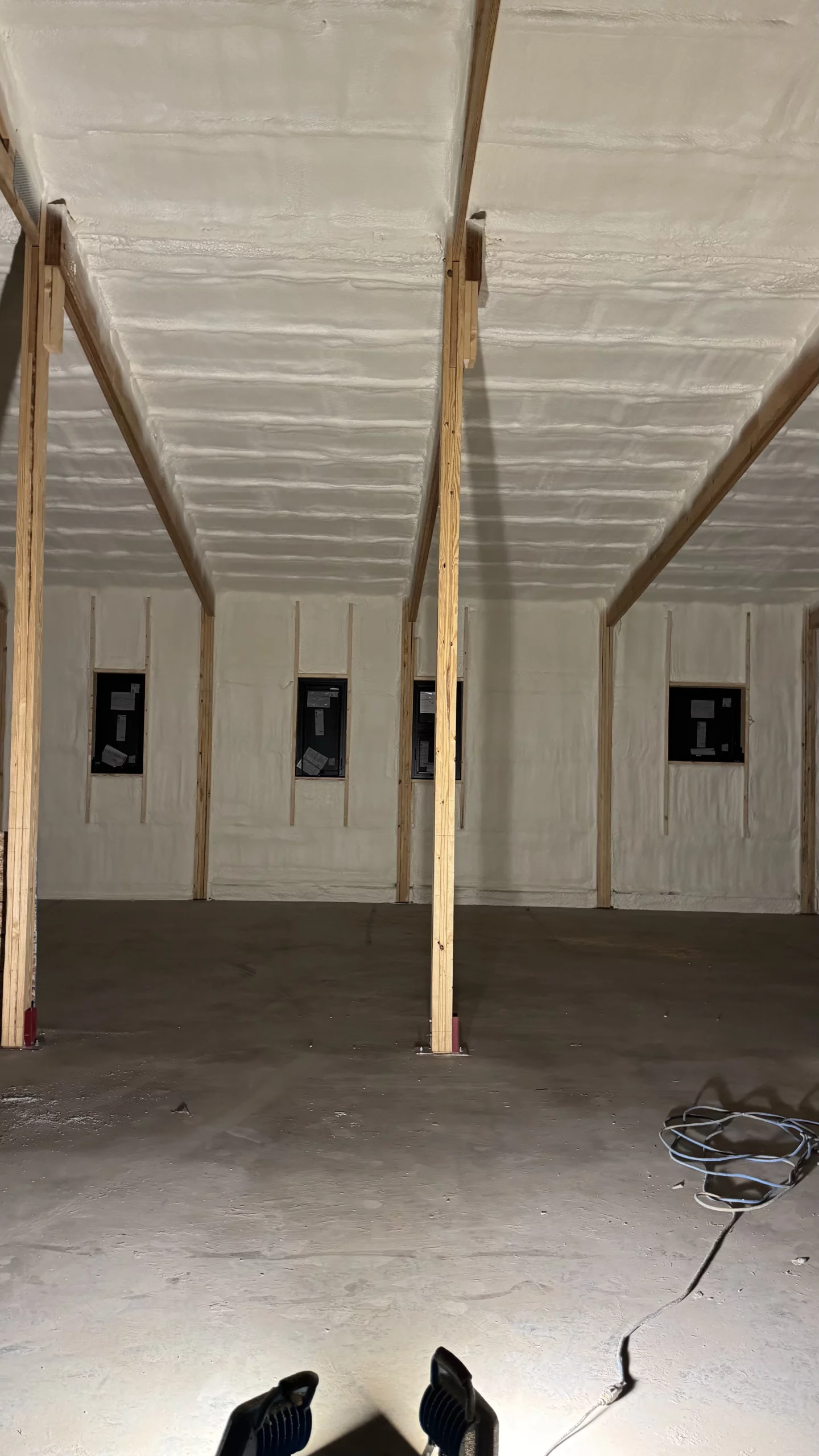
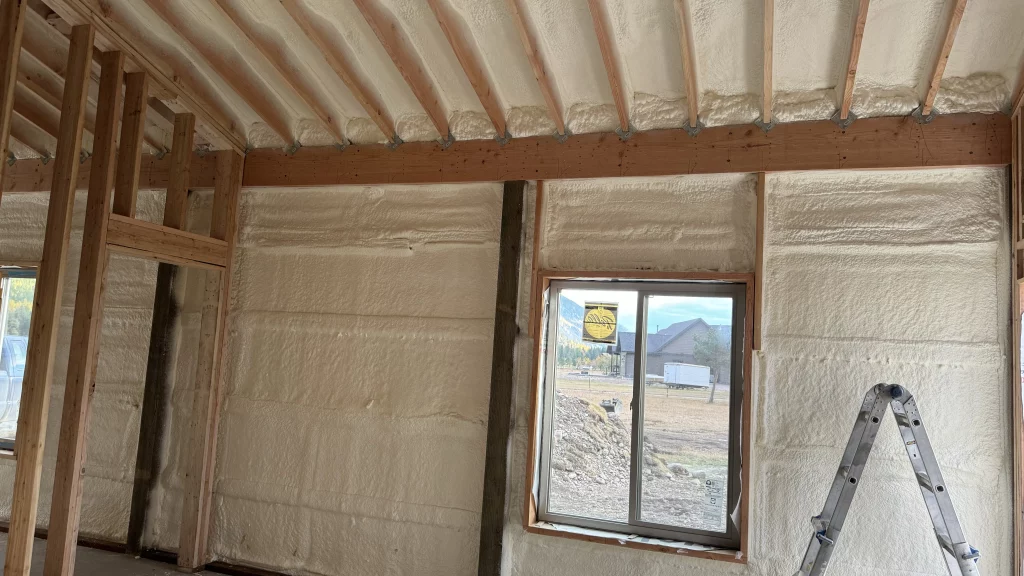
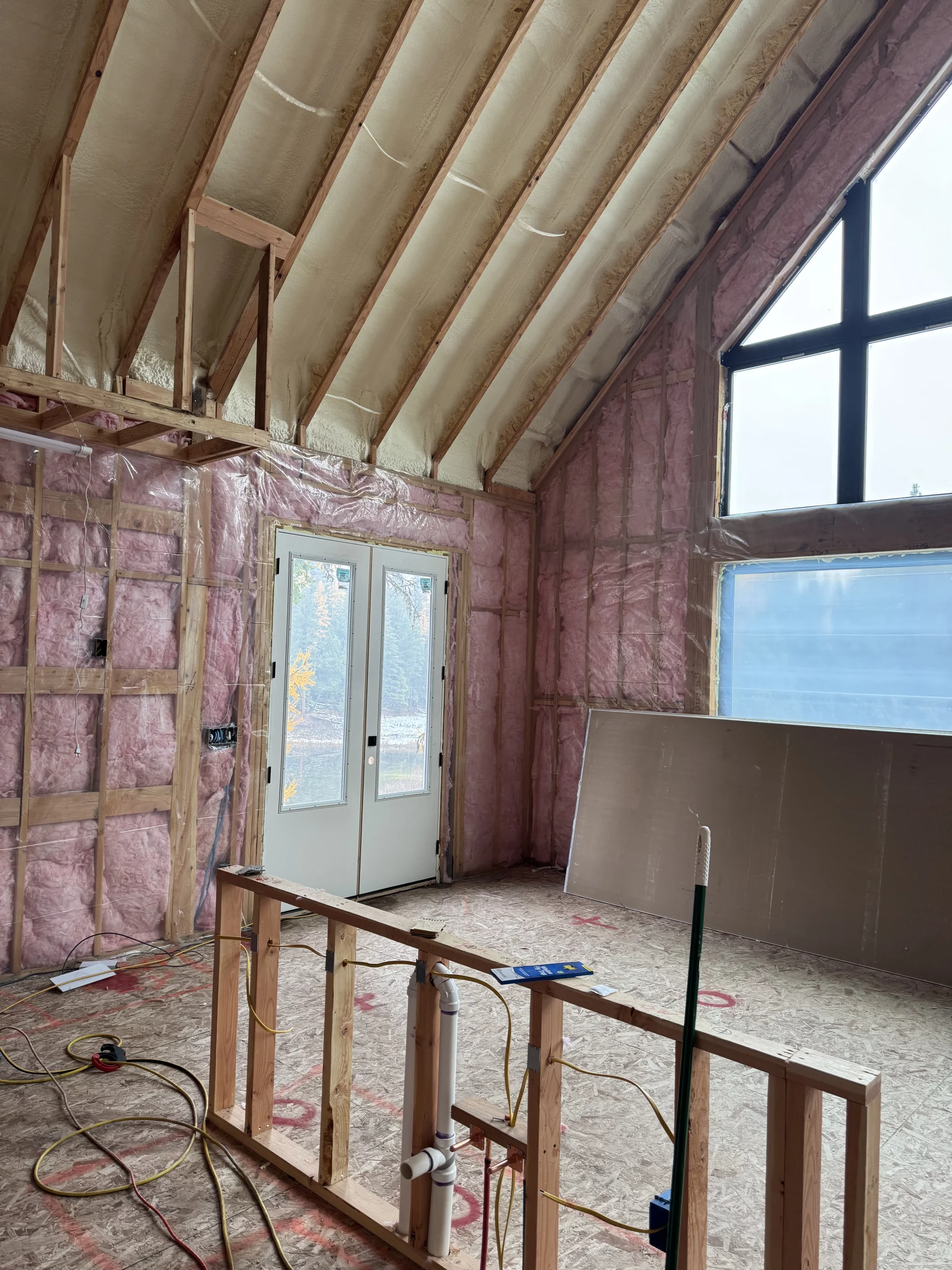
Spray foam insulation addresses this problem by expanding to fill cavities completely and adhering to surrounding surfaces. It creates an airtight seal that eliminates the drafts and air leaks responsible for a significant portion of residential energy loss. The Spray Foam Coalition reports that as much as 40% of a building’s energy is lost through air infiltration, a figure that traditional insulation does very little to prevent. In a place like Kalispell, where winter heating demands dominate household energy use for six to seven months of the year, stopping that air leakage has a direct and measurable impact on comfort and cost.
Kalispell’s Climate Zone and What It Demands
Montana’s building codes are based on the International Energy Conservation Code (IECC), and Kalispell falls within Climate Zone 5B, a cool and dry classification. The Montana Department of Environmental Quality outlines insulation requirements for residential buildings in this zone, including minimum R-values for attics, walls, crawl spaces, and basements.
For Climate Zone 5B, the current code requires:
Building Area
Minimum Code R-Value
Spray Foam Advantage
Uninsulated attic
R-49 to R-60
Closed-cell achieves R-49 in roughly 7 to 8 inches; no air gaps or compression issues
Wood-frame wall (existing)
R-20 cavity or R-13 + R-10 CI
Closed-cell at 3 inches provides R-21 plus full air sealing in one pass
Floor over unconditioned space
R-30
Spray foam fills irregular joist bays completely, unlike batts that can leave voids
Basement/crawl space wall
R-15 to R-19
Closed-cell adds moisture resistance, which is critical in below-grade applications
The key difference is not just hitting the R-value number, but achieving it without thermal bridging, compression, or air gaps. Spray foam’s ability to deliver both insulation and an air barrier in one application means the rated R-value more closely matches the actual field performance of the assembly.
Open-Cell vs. Closed-Cell Spray Foam: Which Fits Your Home
Not all spray foam is the same. The two primary types, open-cell and closed-cell, serve different purposes and come with different costs and performance profiles.
Closed-Cell Spray Foam
Closed-cell spray foam has a dense, rigid structure with a higher R-value per inch, typically between R-6 and R-7. It acts as a vapor retarder, which makes it the preferred choice for basements, crawl spaces, rim joists, and exterior-facing walls where moisture control is a priority. In Kalispell’s climate, where ground frost and snowmelt create consistent moisture challenges around foundations, the moisture barrier properties of closed-cell foam provide an extra layer of protection against mold, rot, and structural damage, making it a key component of residential spray foam insulation systems.
Open-Cell Spray Foam
Open-cell spray foam is lighter, more flexible, and less expensive per square foot, delivering approximately R-3.5 per inch. It does not act as a vapor barrier, so it should not be used in areas where moisture drive is a concern. However, it excels in interior wall cavities, attics, and sound-dampening applications where its larger cell structure absorbs and reduces noise transmission between rooms.
Feature
Closed-Cell Foam
Open-Cell Foam
R-value per inch
R-6 to R-7
R-3.5 to R-3.7
Vapor retarder
Yes (Class II)
No
Density
1.5 to 2.0 lb/ft³
0.5 to 1.0 lb/ft³
Best applications
Basements, crawl spaces, exterior walls, rim joists
Interior walls, attics, sound control
Relative cost per inch
Higher
Lower
Structural benefit
Adds wall rigidity
Minimal
For most Kalispell homeowners, the practical approach is a combination: closed-cell foam in moisture-prone areas like basements, crawl spaces, and rim joists, and open-cell or a cost-effective alternative in interior attic spaces and partition walls where moisture is less of a concern.
Energy Savings: What to Expect
The financial case for spray foam insulation in Kalispell starts with the region’s high heating costs. Montana households spend a disproportionate amount of their energy budget on space heating compared to the national average. The EPA’s ENERGY STAR program estimates that homeowners can save an average of 15% on heating and cooling costs by properly sealing air leaks and adding insulation. In heating-dominated climates like Zone 5B, the percentage savings on heating alone can be even higher.
Beyond monthly utility savings, spray foam can reduce the size and cost of HVAC equipment needed for the home. Because the heating and cooling load drops significantly in a well-sealed, well-insulated house, the Spray Foam Coalition notes that HVAC sizing can be reduced by as much as 35% without sacrificing comfort. A smaller, right-sized HVAC system costs less to install, runs more efficiently, and lasts longer because it cycles on and off less frequently.
Comfort Improvements Beyond Energy Bills
Energy savings are the most quantifiable benefit, but comfort is what homeowners notice every day. Spray foam eliminates cold spots, drafts near windows and doors, and the temperature differences between floors that are common in poorly insulated homes. In Kalispell winters, rooms over garages, bonus spaces above unheated areas, and finished basements all benefit from spray foam’s ability to maintain consistent temperatures.
Spray foam also reduces noise transmission between rooms and from the outside. Open-cell foam in particular absorbs sound, making it a practical choice for home offices, media rooms, and bedrooms near noisy areas. The airtight seal also keeps out dust, pollen, and outdoor pollutants, which contribute to better indoor air quality, especially during Kalispell’s wildfire season when smoke from regional fires can infiltrate homes through gaps and cracks in the building envelope.
Recommendations by Home Type
New Construction
For homeowners building in the Kalispell area, spray foam offers the chance to get the building envelope right from the start. Closed-cell foam on rim joists and basement walls, combined with open-cell or closed-cell in-wall cavities and attic flat areas, creates a high-performance thermal envelope that meets or exceeds code with room to spare. New builds also make it easier to coordinate proper ventilation, which is necessary in any tightly sealed home.
Existing Home Retrofit
Retrofitting spray foam into an existing home is most impactful when applied to accessible areas like attics, crawl spaces, and rim joists. These areas tend to be the most under-insulated and the greatest sources of air leakage. Attics, in particular, are where the majority of heat escapes in winter, and spray foam applied to the roof deck (creating an unvented attic assembly) can dramatically improve comfort while protecting ductwork from temperature extremes.
Older Homes with Minimal Insulation
Homes built before modern energy codes often have little more than R-11 fiberglass in wall cavities and no insulation in crawl spaces or rim joists. For these homes, spray foam applied to rim joists, basement walls, and the attic can yield the most dramatic improvements. Wall cavity retrofits are possible but more invasive, typically requiring the removal and replacement of interior or exterior finishes, which is why upgrading existing homes with residential spray foam insulation often delivers the greatest impact on energy performance.
Signs You’ve Chosen the Right Insulation Contractor
Selecting the right insulation professional matters as much as choosing the right material. Here are the indicators that you are working with a qualified team:
They perform a thorough assessment before recommending any product, including reviewing your home’s existing insulation levels, identifying air leakage pathways, and understanding your comfort concerns.
They explain the differences between open-cell and closed-cell foam and recommend specific products based on your home’s needs, not just the higher-priced option.
They follow manufacturer installation guidelines for temperature, thickness, and application rates, and can explain their quality control process.
They address ventilation requirements and do not suggest making your home airtight without a plan for fresh air exchange.
They provide clear, written estimates that specify the type of foam, the R-value being targeted, the areas to be insulated, and the total scope of work.
Get Started with Wegner Insulation
Wegner Insulation has been helping Kalispell homeowners improve their comfort and reduce energy costs for years. Our team evaluates each home individually, recommends the right spray foam solution based on your specific needs and budget, and installs every project to meet or exceed Montana’s energy code requirements. Whether you are building new, retrofitting an older home, or tackling a specific problem area like a drafty attic or cold basement, we can help.
Request a quote today by calling us at (406) 654-4636 or emailing anthony@wegnerinsulation.com. Prefer a hands-on evaluation? Schedule an insulation assessment, and our team will visit your home to identify the best areas for improvement and provide a detailed recommendation.
Frequently Asked Questions
How long does spray foam insulation last in a home?
Spray foam insulation is designed to last the lifetime of the building without settling, sagging, or degrading in R-value, making it a permanent upgrade to your home’s thermal envelope.
Is spray foam insulation safe for my family after installation?
Once fully cured, which typically happens within 24 hours, spray foam is inert and non-toxic. Proper ventilation during installation and the curing period is required, but the finished product does not off-gas or release harmful chemicals.
Can spray foam be installed in winter in Kalispell?
Spray foam can be installed year-round in Kalispell, though extreme cold temperatures may require temporary heating of the work area to ensure proper curing and adhesion. Our team plans installations with weather conditions in mind.
Does spray foam insulation require a vapor barrier in Climate Zone 5B?
Closed-cell spray foam acts as its own vapor retarder and does not require an additional barrier. Open-cell foam does not control vapor diffusion, so a separate vapor retarder may be needed depending on the application and location within the building assembly.
How does spray foam affect my home’s resale value?
Upgraded insulation, especially spray foam in attics and basements, is increasingly recognized by appraisers and buyers as a measurable improvement. Energy-efficient homes with lower utility costs tend to sell faster and at higher prices in competitive markets.
Sources
Department of Energy – Insulation – Comprehensive guide on how insulation works, R-values, and recommended insulation levels by climate zone for residential homes.
Spray Foam Coalition – Energy Efficiency – Industry data on spray foam energy performance, air sealing benefits, HVAC sizing reductions, and common air leak locations.
EPA ENERGY STAR – Seal and Insulate – EPA estimates on energy savings from air sealing and insulation, including the 15% average reduction in heating and cooling costs.
Blown-in fiberglass insulation loses effectiveness over time primarily because gravity, moisture, and convective air movement within the material cause it…