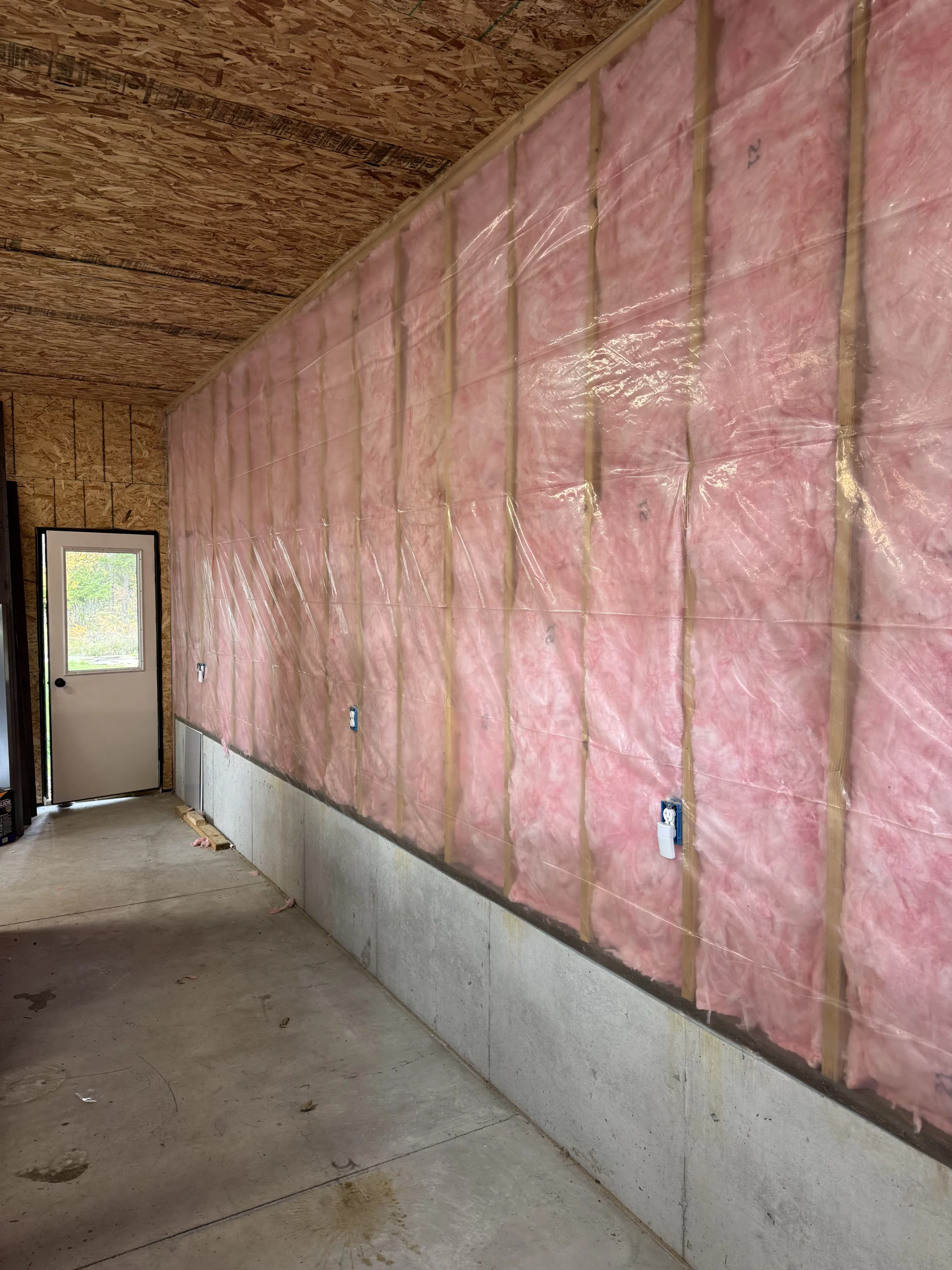
What Homeowners Need to Know Before Upgrading Insulation in Existing Properties in Evergreen, MT?
admin-wegnerinsulation
April 27th, 2026
Upgrading insulation in an existing home in Evergreen, MT, is one of the most impactful improvements a homeowner can make for comfort and energy savings, but the right approach depends on several factors: the age and construction of your home, current insulation levels, your budget, and the specific areas that need attention. Evergreen sits in Montana’s cold climate zone, where heating accounts for roughly half of a household’s energy costs, making proper insulation not just a comfort upgrade but a financial necessity. Before committing to any project, homeowners should understand the different insulation types suited for retrofits, the R-value requirements specific to Montana’s climate zone, the importance of air sealing before adding insulation, and how to evaluate a qualified insulation contractor for the job. Building a plan around home insulation upgrades for existing homes helps ensure long-term performance and energy efficiency.
TLDR / Key Takeaways
Evergreen, MT, falls within Climate Zone 6-7, where heating is the single largest energy expense, making insulation upgrades especially cost-effective.
The EPA estimates homeowners can save an average of 15% on heating and cooling costs (11% on total energy costs) by combining air sealing with attic, crawl space, and basement insulation upgrades. In northern climate zones like Montana’s, those savings are even higher, reaching approximately 14% on total house energy and 18% on heating and cooling alone.
Montana’s recommended insulation levels call for ceilings at R-49 to R-60, above-ground walls at R-19 to R-21, basement walls at R-19, and crawlspace floors at R-30.
Air sealing must happen before insulation is added. Sealing gaps around plumbing, electrical wiring, chimneys, and other penetrations prevents conditioned air from escaping and keeps insulation performing at its rated R-value.
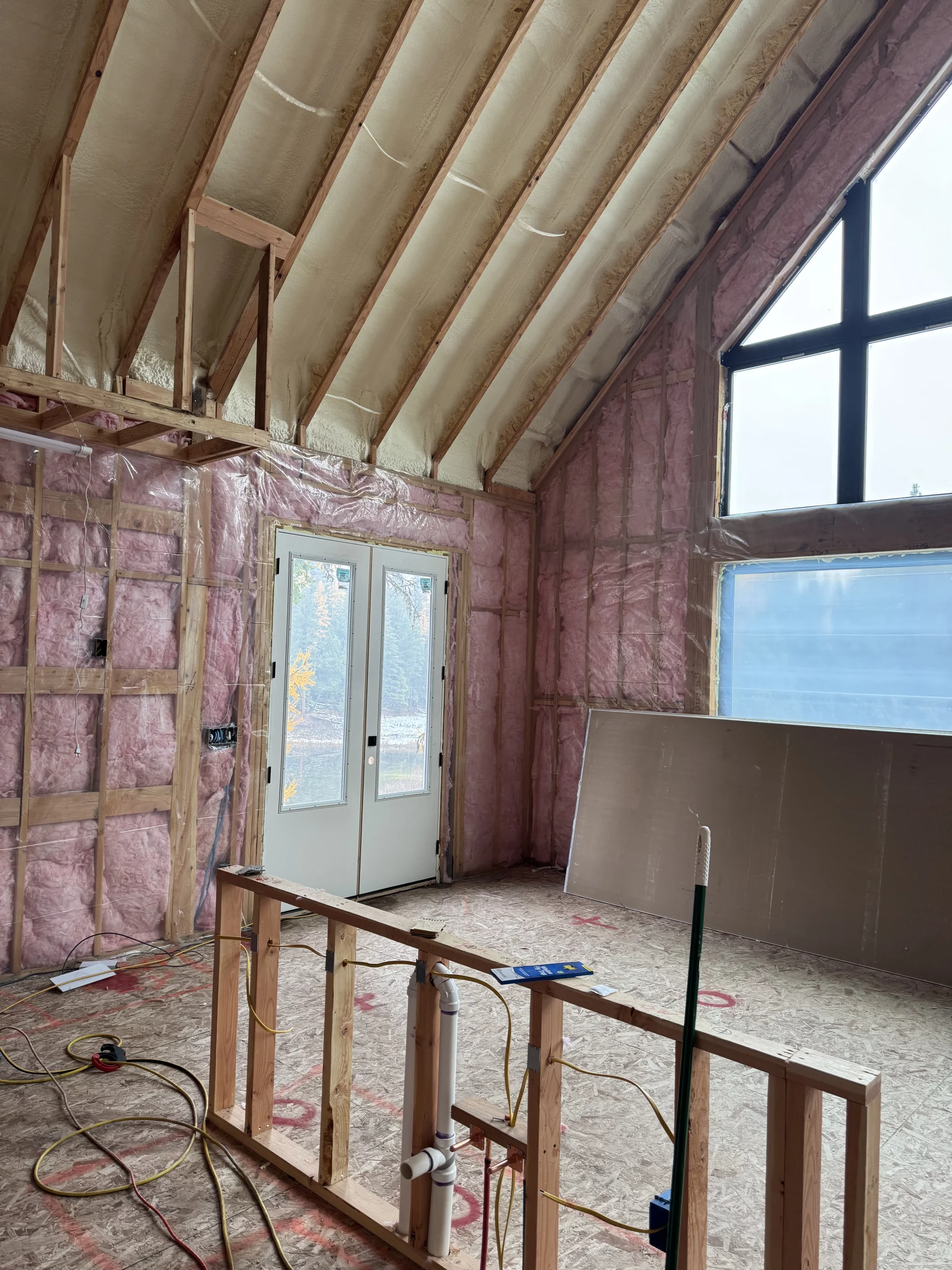
Blown-in insulation (cellulose, fiberglass, mineral wool) and spray foam are the most practical options for retrofitting existing wall cavities without removing drywall.
Montana adopted the 2021 International Energy Conservation Code (IECC) with state amendments effective June 2022, which applies to new construction and significant renovations.
A professional home energy audit is the best starting point to identify exactly where your home loses heat and which upgrades will deliver the strongest return.
Why Insulation Matters More in Evergreen’s Climate
Evergreen, Montana, experiences long, cold winters with temperatures regularly dropping well below freezing for months at a time. The area falls within Climate Zone 6 or 7 on the International Energy Conservation Code map, depending on the specific location within Flathead County. Homes in these zones lose significantly more heat through poorly insulated walls, attics, and foundations than homes in milder climates.
According to the Montana Department of Environmental Quality (DEQ), heating accounts for approximately 49% of a Montana household’s total utility bill, far exceeding any other single energy use. This means even modest improvements in insulation performance translate directly into measurable dollar savings during the heating season, which in Evergreen can stretch from October through April.
The ENERGY STAR savings methodology confirms that insulation upgrades in northern climate zones like Montana’s deliver higher returns than the national average. In Climate Zone 6, homeowners can expect approximately 14% savings on total energy costs and 18% on heating and cooling costs alone through cost-effective air sealing and insulation improvements.
Understanding R-Values and Montana’s Recommended Levels
R-value measures an insulation material’s resistance to heat flow. The higher the R-value, the better the insulation performs. For Evergreen homeowners, knowing the recommended R-values for each area of the home helps identify where existing insulation falls short.
Area of Home
Montana Recommended R-Value
Montana Energy Code Minimum
Common Deficiency in Older Homes
Ceilings / Attic
R-49 to R-60
R-49
Often R-19 to R-30 or less
Above-Ground Walls
R-19 to R-21
R-20 cavity / R-13+5 continuous
Often R-11 or none
Basement Walls
R-19
R-15 continuous or R-13 cavity
Frequently uninsulated
Crawlspace Walls
R-19
R-15 continuous
Commonly uninsulated
Crawlspace Floor
R-30
R-25
Rarely insulated
Floors Over Unheated Spaces
R-30
R-30
Varies widely
Many homes in the Evergreen area were built decades ago, when insulation standards were far lower than today. A home built in the 1970s or 1980s may have only R-11 in the walls and R-19 to R-30 in the attic, both well below current recommendations. Even newer homes can benefit from topping up attic insulation, which is typically the most cost-effective upgrade available.
The Critical Step: Air Seal Before You Insulate
One of the most common mistakes homeowners make is adding insulation without first addressing air leaks. Insulation works by trapping still air, but if air is moving through gaps and cracks in your building envelope, insulation cannot do its job effectively. The U.S. Department of Energy explicitly recommends completing air sealing before installing any new insulation.
Common air leak locations in existing homes include:
Around plumbing pipes and electrical wiring penetrations
Gaps around the chimney and flue chases
Recessed light fixtures in the ceiling below the attic
Around window and door frames
Where the foundation meets the wood framing (rim joist area)
Access hatches to the attic and crawl space
Sealing these leaks with caulk, spray foam, or weatherstripping prevents warm indoor air from escaping into the attic or walls, which also reduces the risk of moisture condensation within the insulation. Moisture buildup can degrade insulation performance over time and, in severe cases, promote mold growth.
Insulation Types for Retrofit Projects in Existing Homes
Not all insulation products work well in every situation. When upgrading an existing home, the installation method matters as much as the material itself. The Department of Energy’s guide to insulation types provides a detailed breakdown of options, but here are the most practical choices for retrofit applications in Evergreen.
Blown-In and Loose-Fill Insulation
This is the most common and cost-effective choice for upgrading attic insulation and filling existing wall cavities. Materials include cellulose (made from recycled paper), fiberglass, and mineral wool. A professional installer uses a blowing machine to fill the space, and the material conforms to irregular shapes and around obstructions like wiring and plumbing. For attics, blown-in insulation can be added directly over existing insulation to reach the target R-value without removing anything, making home insulation upgrades a practical option.
Spray Foam Insulation
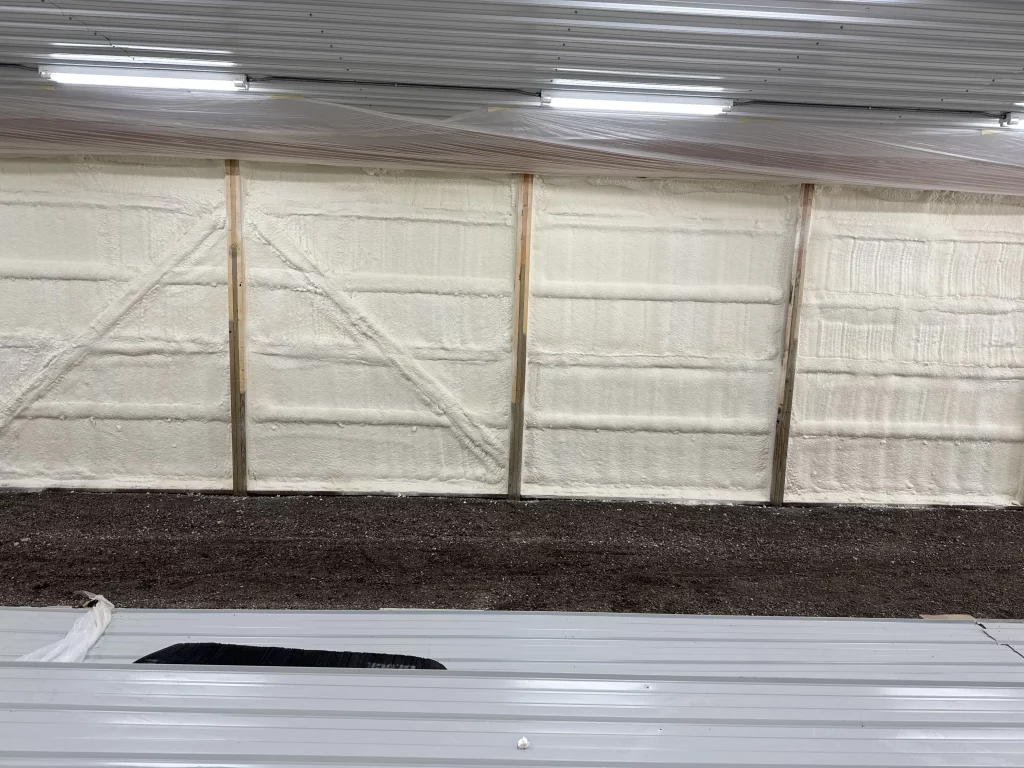
Spray foam comes in open-cell and closed-cell varieties. Closed-cell foam offers a higher R-value per inch (approximately R-6.5 to R-7 per inch) and acts as both an insulation layer and an air barrier in a single application. Open-cell foam has a lower R-value (approximately R-3.5 to R-3.7 per inch) but fills cavities thoroughly and at a lower cost. Spray foam is particularly effective for rim joist areas in basements, crawl spaces, and hard-to-reach wall cavities, making spray foam insulation in Evergreen, MT a highly effective solution for targeted applications.
Batts and Rolls
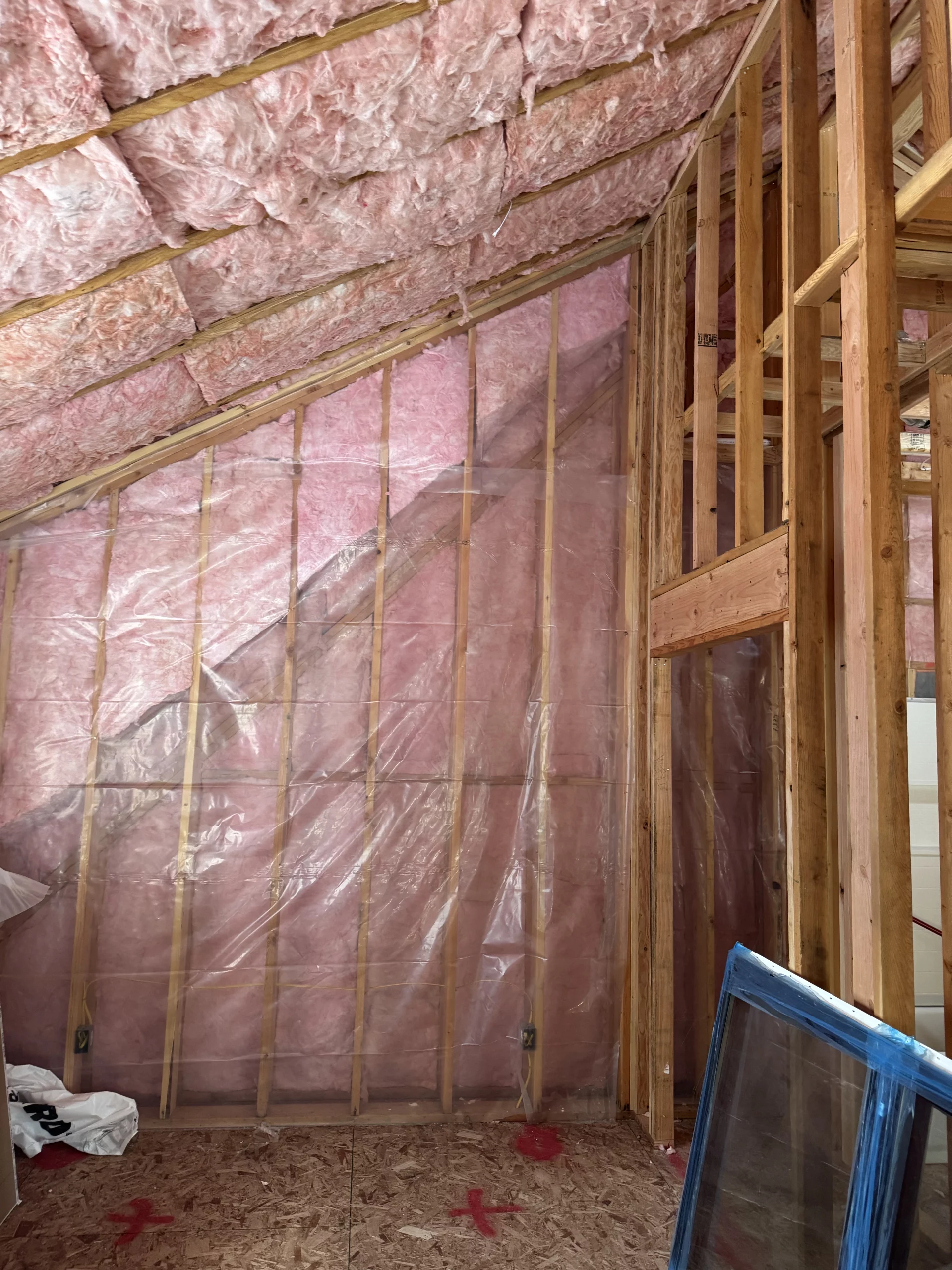
Fiberglass or mineral wool batts work well in accessible areas like unfinished attic floors, basement ceilings, and crawl spaces where framing is standard and unobstructed. While affordable and straightforward to install, batts can leave gaps if not cut and fitted carefully, which reduces their effective performance.
Rigid Foam Board
Rigid foam panels made from polystyrene, polyisocyanurate, or polyurethane offer high R-value per inch and work well on basement walls, crawl space walls, and as continuous exterior insulation. They must be covered with a thermal barrier (like half-inch drywall) for fire safety when installed in occupied spaces.
Insulation Type
Best Retrofit Application
R-Value Per Inch
Installation Method
DIY Feasibility
Blown-In Cellulose
Attics, existing wall cavities
~3.2 to 3.8
Machine-blown
Attics only
Blown-In Fiberglass
Attics, existing wall cavities
~2.2 to 2.7
Machine-blown
Attics only
Closed-Cell Spray Foam
Rim joists, crawl spaces, walls
~6.5 to 7.0
Professional spray equipment
No
Open-Cell Spray Foam
Wall cavities, attics
~3.5 to 3.7
Professional spray equipment
No
Fiberglass Batts
Accessible attics, basements
~3.1 to 3.4
Hand-fitted between the framing
Moderate
Rigid Foam Board
Basement walls, exterior walls
~3.8 to 6.5
Mechanically fastened
Moderate
Where to Start: Prioritizing Your Insulation Upgrades
Not every area of the home delivers the same return on investment. For most Evergreen homeowners, the best sequence is:
Attic first. Attic insulation is the most accessible, least expensive, and highest-impact upgrade available. If your attic currently has less than R-38, adding blown-in insulation to reach R-49 or higher typically pays for itself within a few heating seasons.
Basement rim joist. The rim joist area, where the wood framing sits on top of the foundation, is a major source of air leakage and heat loss. Spray foam insulation here addresses both problems at once.
Exterior walls. Upgrading wall insulation in an existing home is more involved because it requires either drilling and filling cavities with blown-in material or removing exterior siding to add rigid foam. The savings are meaningful, but the cost is higher, and the disruption is greater.
Crawl spaces and floors over unheated areas. Insulating and sealing crawl spaces, especially conditioned crawl spaces, improves comfort in the rooms above and protects plumbing from freezing.
Signs You’ve Found the Right Insulation Contractor
Choosing a qualified contractor is just as important as choosing the right insulation material. A few indicators separate experienced, trustworthy installers from the rest:
Written estimate with specific R-values. A professional contractor will quote the target R-value for each area, not just a price per bag or square foot. The Department of Energy recommends obtaining written estimates from several contractors and notes that prices for the same R-value can vary by more than a factor of two.
Air sealing is included in the scope. The right contractor will recommend or include air sealing as part of the insulation project, not treat it as an afterthought or separate service.
Experience with your home type. Homes in Evergreen range from older log cabins to newer stick-built construction. A contractor familiar with Montana building methods understands the challenges of working with older construction and local climate conditions.
References and proof of insurance. Ask for recent local references and verify that the contractor carries liability insurance and workers’ compensation coverage.
Willingness to explain the work. A reliable contractor walks you through the recommended materials, the installation process, and what to expect during and after the project, without pressure or vague claims.
Recommendations by Home Type
Home Type
Primary Insulation Priority
Recommended Approach
Expected Benefit
Pre-1970s Home (Minimal Insulation)
Attic, then walls
Blown-in attic insulation + dense-pack wall fill
Largest percentage of energy savings
1970-1990s Home (Partial Insulation)
Attic top-up, rim joist
Blown-in attic overlay + rim joist spray foam
Noticeable comfort and cost improvement
Post-2000 Home (Code-Minimum Insulation)
Attic top-up, basement
Blown-in attic to R-60 + basement wall insulation
Moderate savings, reduced ice dams
Log or Timber Frame Home
Roof/ceiling, chinking gaps
Spray foam roof deck + sealant at logs
Reduced heat loss through thermal mass
Ready to Upgrade Your Home’s Insulation?
Wegner Insulation has been helping Evergreen, MT, homeowners improve comfort and reduce energy costs through professional insulation installations. Our team evaluates your home’s specific needs, recommends the right materials and R-values for Montana’s demanding climate, and completes every project with attention to air sealing and building science principles. Whether your attic needs a top-up or your walls need a full retrofit, we handle it all.
Call us at (406) 654-4636 or email [email protected] to get started. We are here to make your Evergreen home warmer, more efficient, and more comfortable year-round.
Frequently Asked Questions
How do I know if my home needs more insulation?
The simplest method is to inspect your attic. If the insulation level is at or below the floor joists, you likely need more. A professional energy audit with blower door testing provides the most accurate assessment of where your home is losing heat.
Can insulation be added to existing walls without removing drywall?
Yes. Blown-in cellulose or fiberglass can be installed through small holes drilled in the wall, either from the exterior (after removing and replacing siding sections) or from the interior (through patchable holes). Spray foam injection is another option for enclosed wall cavities.
How much does an insulation upgrade typically cost in Montana?
Costs vary based on the area being insulated, the material used, and the home’s size and accessibility. Attic insulation upgrades are generally the most affordable starting point. Getting written estimates from multiple contractors for the specific R-value needed is the best way to compare pricing.
Does adding insulation require a building permit in Flathead County?
For new construction and significant renovations, Montana’s statewide energy code applies. For routine insulation upgrades in existing homes, permit requirements vary by jurisdiction. Check with Flathead County or your local building department before starting work.
How long does it take to complete an insulation upgrade?
Most attic insulation projects can be completed in a single day. Wall insulation retrofits, crawl space encapsulation, and basement rim joist work typically take one to two days, depending on the scope of the project and the size of the home.
Types of Insulation – U.S. Department of Energy – Detailed overview of all insulation materials, installation methods, and where each type is most effectively applied in residential construction and retrofits.
Methodology for Estimated Energy Savings – ENERGY STAR – EPA’s energy modeling data showing estimated savings by climate zone, with northern zones (like Montana’s Zone 6) achieving up to 14% total energy savings and 18% heating/cooling savings from air sealing and insulation.
Blown-in fiberglass insulation loses effectiveness over time primarily because gravity, moisture, and convective air movement within the material cause it…