Why spray foam is the best defense against wind washing in Ronan, MT
admin-wegnerinsulation
January 19th, 2026
Spray foam insulation is the most effective barrier against wind washing in Ronan, Montana, due to its unique ability to create a continuous air seal that eliminates gaps and cracks where wind can penetrate. Unlike traditional insulation materials that merely slow heat transfer, spray foam actively blocks air movement, making it the superior solution for homes in Montana that face harsh winds and temperature extremes. This article provides comprehensive details about wind washing, why it matters specifically in Ronan, and how spray foam addresses this problem better than any alternative.
Understanding Wind Washing in Ronan’s Climate
Wind washing occurs when outdoor air moves through insulation cavities, typically through small gaps, cracks, or poorly sealed areas in your home’s envelope. In Ronan, where winter winds frequently exceed 20 mph, with gusts reaching 50 mph, according to the National Oceanic and Atmospheric Administration, this phenomenon can significantly degrade your home’s energy efficiency and comfort. The Flathead Valley’s unique topography funnels winds across the valley floor, creating persistent pressure differentials that drive air through even the smallest openings in your building’s exterior.
The impact of wind washing extends beyond simple drafts. As moving air contacts your insulation, it effectively strips away the thermal boundary, reducing your insulation’s performance by up to 40% in affected areas. This means your heating system works harder to maintain comfort, leading to significantly higher energy bills. The problem becomes most severe during Ronan’s cold winters when temperature differences between inside and outside create stack effects that compound wind-driven air movement.
How Spray Foam Stops Air Movement
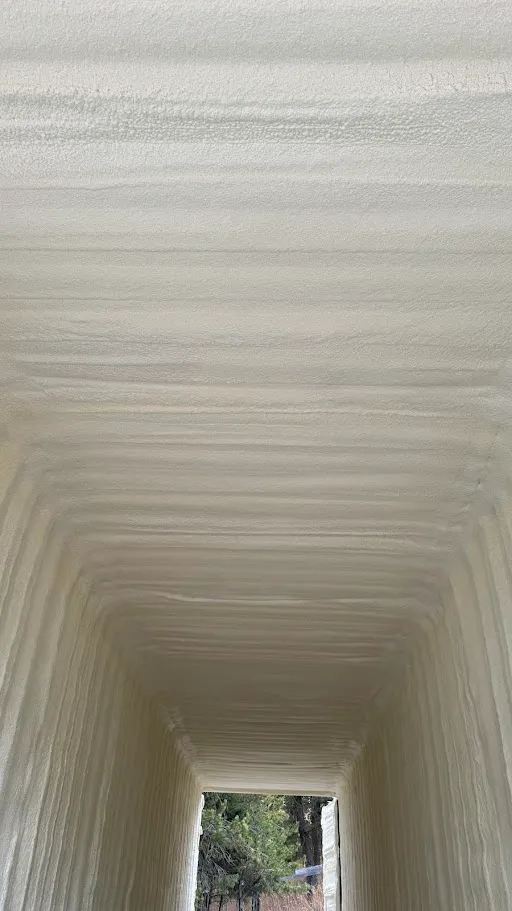
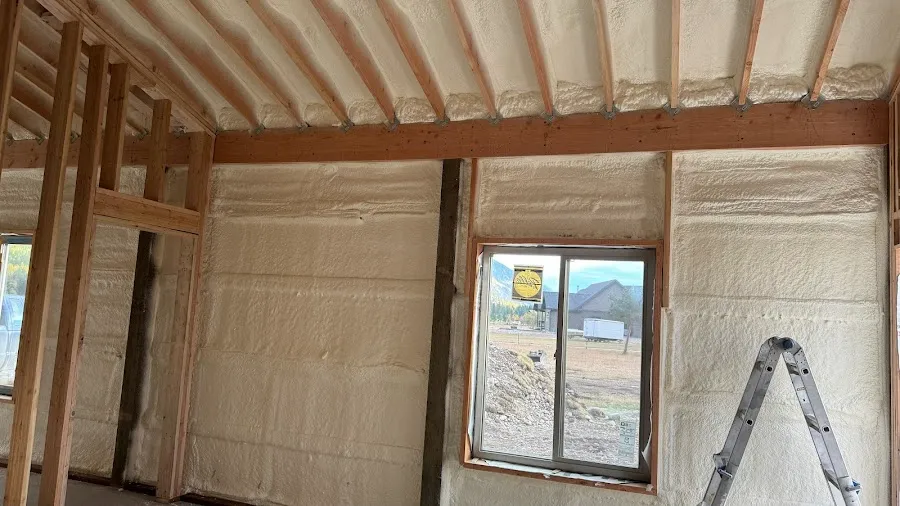
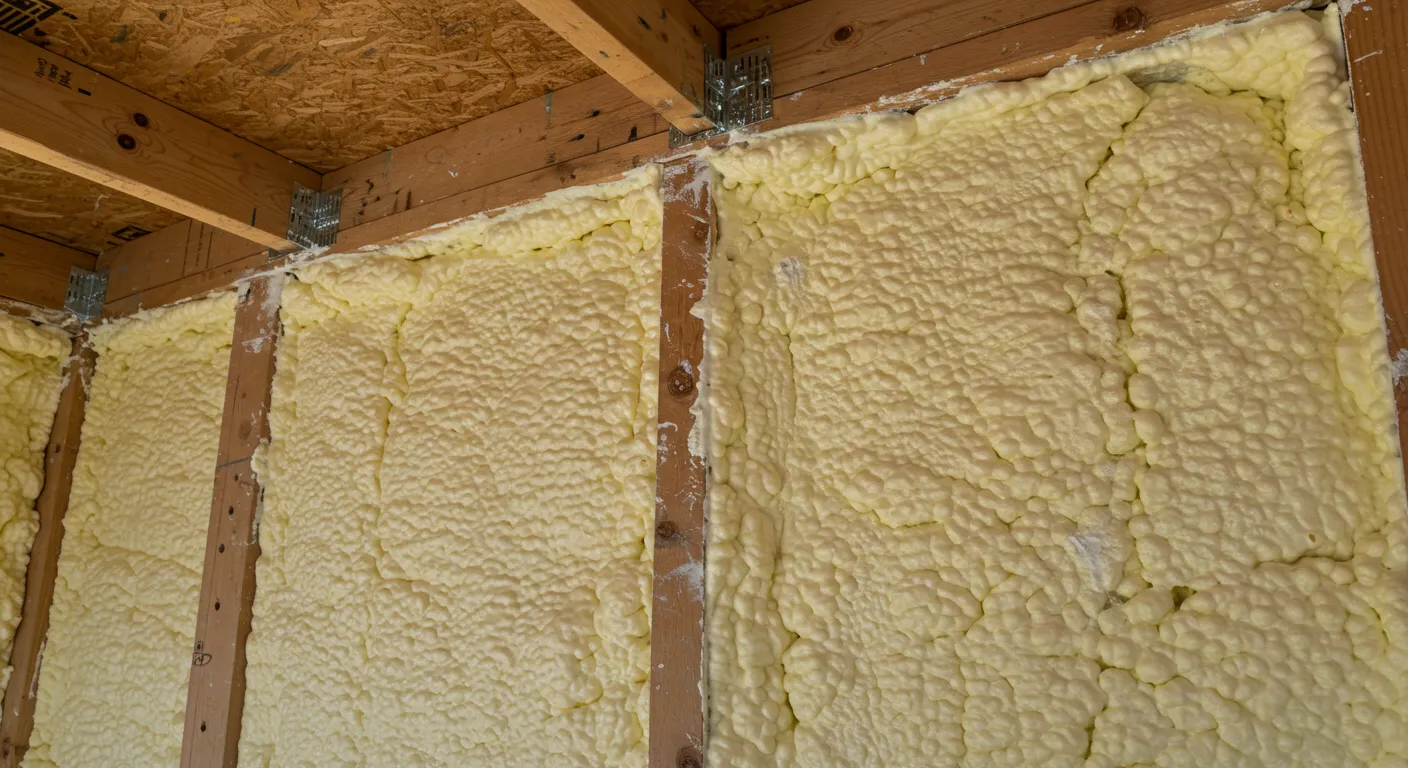
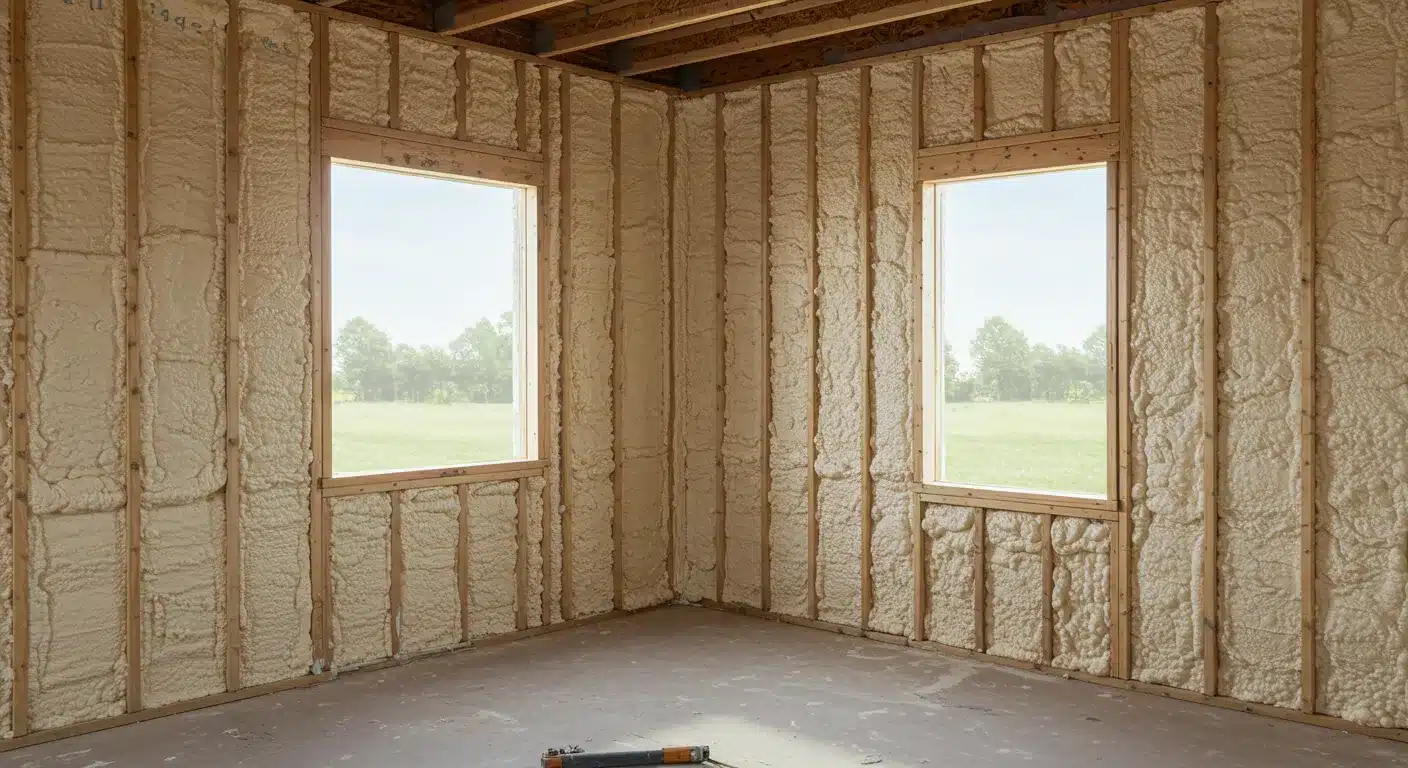
Spray foam insulation works differently from other materials because it expands on application, filling every cavity, crack, and void while simultaneously adhering to surrounding materials. This creates two critical protective layers: an air barrier and a thermal barrier in one application. The foam’s cellular structure traps gas bubbles within a polymer matrix, making it impossible for air to move through the insulation itself.
There are two main types of spray foam, each with specific applications for wind washing prevention:
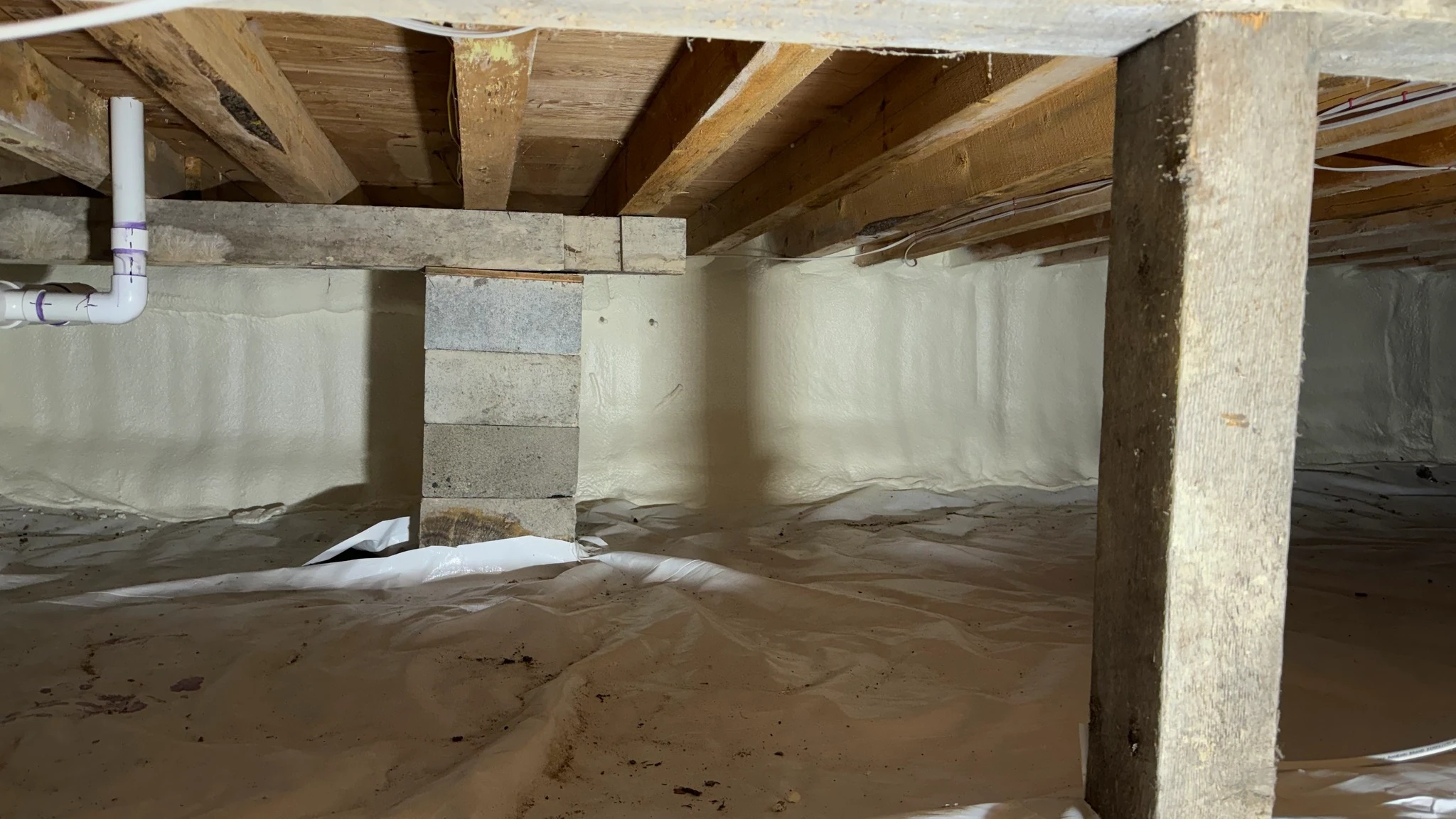
Closed-cell spray foam offers the most comprehensive protection against wind washing with its dense structure that creates both an air barrier and a vapor barrier. It typically expands 30-40 times its original volume and provides R-values of approximately R-6 to R-7 per inch. This makes it ideal for exterior walls, rim joists, and areas where maximum air sealing is required.
Open-cell spray foam provides excellent air sealing with a slightly softer, more flexible structure that expands up to 100 times its original volume. While it allows some moisture vapor transmission, it still completely stops air movement and provides an R-value of about R-3.5 per inch. This works well in interior applications like attics, where some vapor permeability is beneficial.
Comparison With Other Insulation Methods
The effectiveness of spray foam becomes clear when compared to traditional insulation materials. While other options may provide adequate thermal resistance, they fail to address air movement, which is essential for preventing wind washing.
Table: Insulation Material Comparison for Wind Washing Prevention
Material
Air Permeability
R-Value per Inch
Wind Washing Resistance
Vapor Barrier
Typical Applications
Closed-Cell Spray Foam
Impermeable
R-6 to R-7
Excellent
Yes
Exterior walls, crawl spaces
Open-Cell Spray Foam
Impermeable
R-3.5
Excellent
No
Attics, interior walls
Fiberglass Batts
Permeable
R-3.1 to R-4.3
Poor
No
Walls, attics (requires air barrier)
Cellulose
Semi-permeable
R-3.2 to R-3.8
Fair
No
Attics, walls (requires air barrier)
Rigid Foam Board
Varies by type
R-4 to R-6.5
Good to Excellent
Some
Exterior sheathing, foundations
According to research from the U.S. Department of Energy, homes with spray foam insulation consistently demonstrate a 30-50% reduction in air leakage compared to those using traditional insulation materials. This dramatic difference directly translates to improved comfort and lower energy costs, particularly important in Ronan’s climate, where heating season can last more than seven months.
Things to Consider Before Making a Decision
Before installing spray foam insulation, several factors warrant careful consideration to ensure optimal results and avoid potential problems:
The condition of your existing structure matters significantly. Spray foam can exacerbate moisture problems if there are existing water leaks or inadequate drainage systems. A thorough inspection should identify any roof leaks, foundation moisture issues, or plumbing problems before application.
Proper installation is critical for performance. Spray foam requires specialized equipment and trained applicators to achieve correct coverage, thickness, and expansion. Poor installation can lead to gaps, off-gassing issues, or inadequate performance. The foam should be applied at specific temperatures and humidity levels for optimal results.
Cost considerations include both initial investment and long-term savings. Spray foam typically costs 2-3 times more than traditional insulation materials upfront, but the energy savings often provide a payback period of 3-7 years, according to the Insulation Institute.
Montana building codes require specific installation practices and documentation. Some areas may require additional vapor barriers or have restrictions on foam types in certain applications. Always verify local requirements before proceeding.
Common Questions
Bonus Tip: Detection Methods
You can detect wind washing in your home using several methods. On a cold, windy day, hold your hand near electrical outlets, baseboards, and window frames to feel for drafts. Another effective test uses a smoke pencil or incense stick – hold it near potential leakage points and watch for smoke movement that indicates air flow.
Bonus Tip: Priority Areas
When budgeting for spray foam installation, focus first on the most problematic areas. Rim joists, attic hatches, and band joists typically experience the worst wind washing. Addressing these critical junctions first provides the biggest improvement per dollar spent.
Bonus Tip: Combination Approaches
For homeowners working with limited budgets, combining spray foam in critical areas with traditional insulation elsewhere can be cost-effective. Use spray foam to seal all penetrations, then fill larger cavities with more affordable materials while maintaining the air barrier.
Key Points About Wind Washing Protection
The effectiveness of spray foam against wind washing comes from its unique ability to create a continuous, monolithic air barrier that eliminates gaps and cracks, preventing wind from penetrating your home’s thermal envelope. In Ronan’s climate, where wind-driven heat loss significantly impacts energy bills and comfort, this comprehensive protection makes spray foam the superior choice despite its higher initial cost.
Traditional insulation methods simply cannot match the air sealing capabilities of spray foam. Even when combined with house wraps and caulking, batt insulation, cellulose, and rigid foam boards leave small gaps and penetrations that allow wind washing to continue degrading your home’s energy performance. Spray foam’s expansion properties ensure complete coverage in every cavity and crack.
For homeowners evaluating their insulation needs, consider the specific wind patterns affecting your property, the age and condition of your existing insulation, and your long-term energy efficiency goals. The investment in spray foam typically pays for itself through reduced heating costs, improved comfort, and increased home value.
Professional Assessment Services
Wegner Insulation provides comprehensive insulation evaluations for Ronan homeowners dealing with wind washing issues. Contact Anthony Wegner at [email protected] or call (406) 654-4636 to schedule a detailed assessment of your home’s current insulation performance and receive personalized recommendations for preventing wind washing. The evaluation includes thermal imaging to identify air leakage points, blower door testing to measure overall air tightness, and a detailed cost-benefit analysis for various insulation options.
Frequently Asked Questions About Wind Washing and Spray Foam
Can spray foam be installed over existing insulation?
Yes, spray foam can be applied over existing insulation in many cases, particularly in attics where it can be added directly on top of fiberglass or cellulose. However, in wall cavities, existing insulation often needs to be removed to ensure proper foam coverage and expansion.
How long does spray foam insulation last?
Properly installed spray foam insulation typically lasts the lifetime of the building without degradation. The material doesn’t settle, compress, or break down over time like traditional insulation materials, maintaining its R-value and air sealing properties for decades.
Is spray foam safe for homes with children or pets?
Once fully cured (typically 24-48 hours after installation), spray foam is inert and safe for all occupants. During installation, proper ventilation and temporary evacuation are recommended. The material has been extensively tested and approved for residential use when installed according to the manufacturer’s specifications.
Will spray foam make my home too tight?
Modern homes require ventilation regardless of insulation type. While spray foam creates a tight building envelope, this actually allows for controlled ventilation systems to work more efficiently. Many homes with spray foam use energy recovery ventilators (ERVs) or heat recovery ventilators (HRVs) to maintain excellent indoor air quality while minimizing energy loss.
Spray foam insulation delivers superior indoor comfort in Kalispell homes by maintaining consistent temperatures year-round and eliminating drafts and moisture…