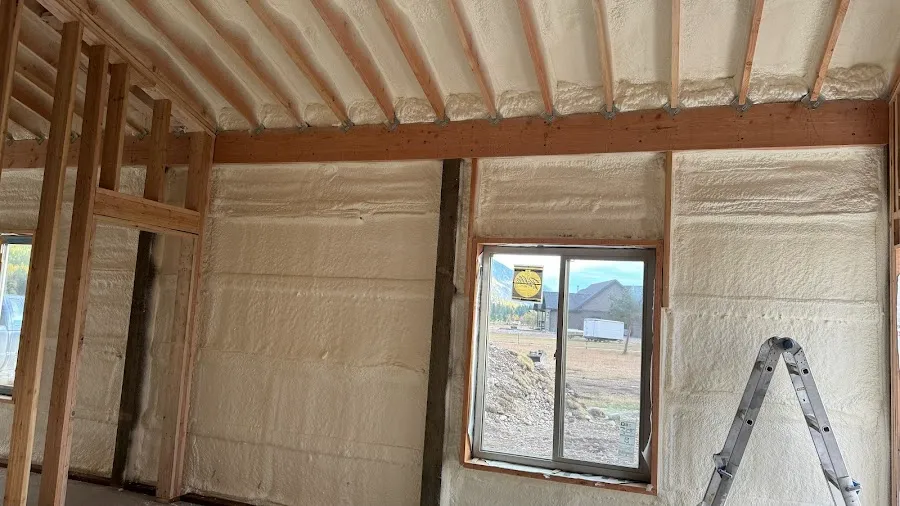
Residential Spray Foam Insulation vs Traditional Insulation in Pablo Homes
admin-wegnerinsulation
March 31st, 2026
For homeowners in Pablo, Montana, spray foam insulation delivers superior energy efficiency and long-term cost savings compared to traditional fiberglass or cellulose insulation, though it comes with a higher upfront investment. Spray foam provides up to twice the R-value per inch, creates an air-tight seal that eliminates drafts, and can reduce energy costs by up to 50%, while traditional insulation typically achieves only 20-30% savings. In Montana’s harsh climate, where winter temperatures can drop to -7°F and homes require ceiling insulation rated at R-49 and walls at R-20, the enhanced performance of spray foam often justifies the initial cost through dramatically lower heating bills over time, making it a preferred option in residential spray foam applications. Traditional insulation remains a viable choice for budget-conscious projects or homes where walls are already open, and air sealing can be addressed separately.
TLDR / Key Takeaways
Spray foam costs $1.50-$3.00 per square foot installed, while fiberglass batts cost $0.30-$1.50 per square foot
Spray foam achieves R-6 to R-7 per inch (closed-cell) vs R-2.2 to R-3.8 per inch for fiberglass
Energy savings reach up to 50% with spray foam compared to 20-30% with traditional insulation
Closed-cell spray foam provides both insulation and air sealing in one application
Montana homes require R-49 in ceilings and R-20 in walls, making high-performance insulation critical
Spray foam lifespan exceeds 20 years with minimal degradation, while fiberglass can settle and lose effectiveness
Traditional insulation works well for DIY projects or when budget constraints exist
Pablo’s climate zone (Zone 6) experiences approximately 8,000 heating degree days annually
Performance Comparison: R-Value and Thermal Efficiency
The R-value measures how well insulation resists heat flow, and higher numbers indicate better thermal performance. Spray foam insulation offers significantly higher R-values per inch compared to traditional options, making it ideal for Pablo homes where maximizing thermal resistance in limited wall cavity space matters.
Insulation Type
R-Value Per Inch
Typical Applications
Air Sealing Capability
Closed-Cell Spray Foam
R-6 to R-7
Walls, ceilings, crawl spaces
Excellent
Open-Cell Spray Foam
R-3.5 to R-3.8
Walls, attics
Good
Fiberglass Batts
R-2.2 to R-3.8
Walls, floors, ceilings
None
Blown Fiberglass
R-2.2 to R-2.7
Attics, walls
Minimal
Cellulose
R-3.2 to R-3.8
Attics, walls
Fair
Closed-cell spray foam delivers up to twice the thermal efficiency per inch compared to fiberglass or cellulose, according to technical comparisons of insulation materials. This matters significantly in Pablo’s cold climate, where meeting code requirements of R-49 for ceilings and R-20 for walls can be challenging with traditional materials alone.
Cost Analysis: Upfront Investment vs Long-Term Savings
Understanding the true cost of insulation requires looking beyond the initial price tag to consider energy savings over the life of the home.
Initial Installation Costs
Insulation Type
Cost Per Square Foot
Cost for 2,000 sq ft Home
Installation Complexity
Fiberglass Batts
$0.30-$1.50
$600-$3,000
Simple (DIY possible)
Blown Fiberglass
$0.50-$1.20
$1,000-$2,400
Professional recommended
Cellulose
$0.60-$1.80
$1,200-$3,600
Professional required
Open-Cell Spray Foam
$0.45-$1.00
$900-$2,000
Professional required
Closed-Cell Spray Foam
$1.50-$3.00
$3,000-$6,000
Professional required
The upfront cost difference is substantial. A Pablo homeowner insulating a 2,000 square foot home might pay $2,000 for fiberglass versus $5,000 or more for closed-cell spray foam. However, spray foam can reduce energy costs by up to 50% compared to 20-30% savings with traditional materials.
Return on Investment Timeline
For a typical Pablo home with annual heating costs of $2,500:
Insulation Type
Annual Savings
Payback Period
20-Year Net Savings
Fiberglass (30% savings)
$750
2-4 years
$12,000-$14,000
Cellulose (30% savings)
$750
3-5 years
$11,000-$13,000
Spray Foam (50% savings)
$1,250
4-8 years
$19,000-$24,000
Spray foam delivers higher lifetime savings despite the longer payback period. The air-sealing properties also prevent the settling and degradation that can reduce fiberglass effectiveness by 20-40% over time.
Air Sealing and Moisture Control
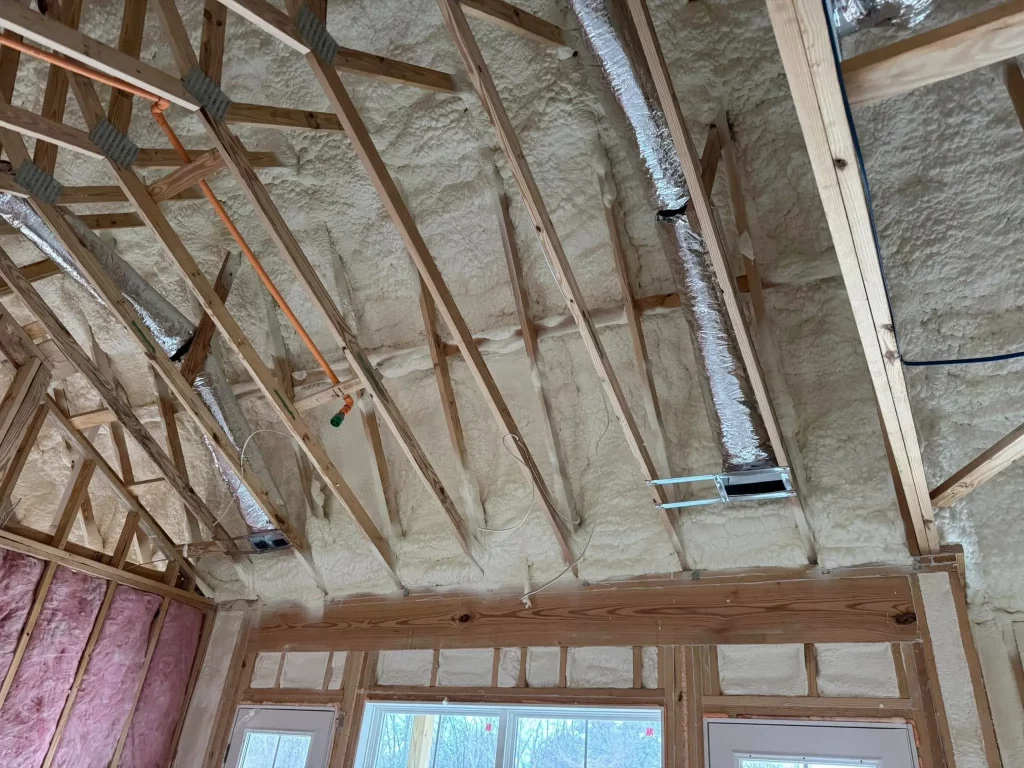
Traditional insulation materials like fiberglass and cellulose resist heat flow but do not stop air movement. Gaps around outlets, plumbing penetrations, and framing connections allow conditioned air to escape, forcing heating systems to work harder, which is why home insulation with spray foam is often a more effective solution for controlling air leakage and improving energy efficiency.
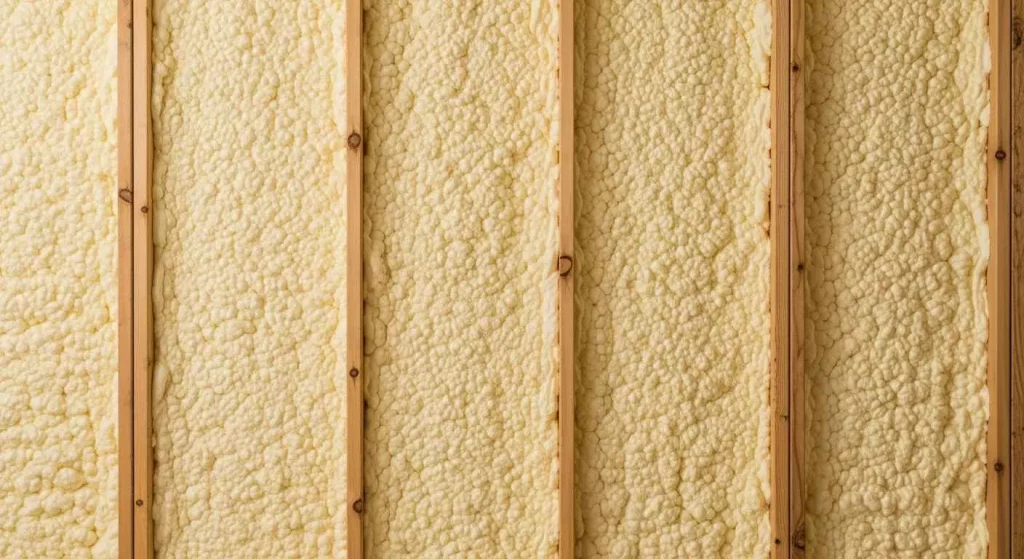
Spray foam expands to fill every gap and crevice, creating a continuous thermal and air barrier that stops both heat transfer and air infiltration. In Pablo’s climate, where winter winds can drive cold air through even small openings, this air-sealing capability provides benefits beyond simple R-value measurements.
Moisture control presents another critical advantage. Closed-cell spray foam acts as a vapor barrier, preventing condensation that can lead to mold growth and structural damage. Traditional insulation absorbs moisture, reducing its R-value and potentially creating conditions for mold.
Climate Considerations for Pablo Homes
Pablo falls within Montana’s Climate Zone 6, characterized by approximately 8,000 heating degree days annually. Design temperatures reach -7°F in winter, meaning heating systems must work continuously to maintain comfortable indoor temperatures.
These conditions make insulation performance critical. The Montana Department of Environmental Quality requires ceiling insulation rated at R-49 and walls at R-20 for new construction and major renovations.
Achieving R-49 in ceilings with fiberglass requires approximately 16-18 inches of loose-fill or 15-16 inches of batts. Spray foam can achieve the same rating in roughly 7-8 inches, preserving attic space and allowing more design flexibility.
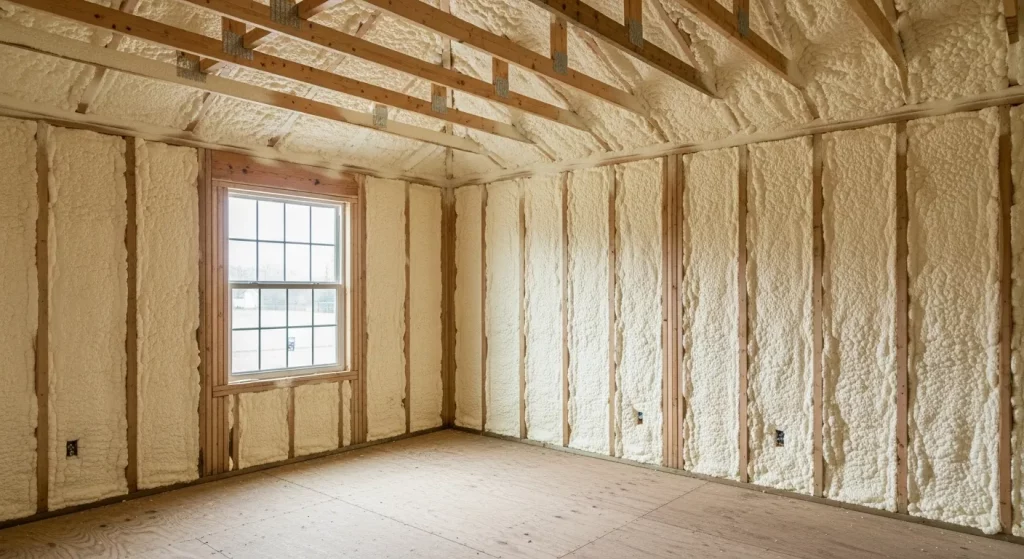
For walls, meeting R-20 with fiberglass batts requires 2×6 framing or exterior rigid foam supplements. Closed-cell spray foam achieves R-20 in standard 2×4 wall cavities with room to spare, making it ideal for retrofit projects where framing cannot be changed.
Real-World Examples: Pablo Area Scenarios
Scenario
Property Type
Recommended Option
Estimated Cost
Annual Savings
New Construction
2,400 sq ft custom home
Closed-cell spray foam throughout
$7,200-$12,000
$1,500-$2,000
Attic Retrofit
1,800 sq ft 1980s ranch
Open-cell spray foam in attic
$1,600-$3,600
$600-$900
Basement Insulation
1,000 sq ft unfinished basement
Closed-cell spray foam on walls
$1,500-$3,000
$400-$700
Budget Addition
400 sq ft room addition
Fiberglass batts with air sealing
$400-$800
$150-$250
Crawlspace Encapsulation
1,500 sq ft crawlspace
Closed-cell spray foam on walls and rim joist
$2,250-$4,500
$500-$800
Factors That Influence the Decision
Several variables affect which insulation type performs best for a specific Pablo home:
Budget Constraints: Fiberglass offers the lowest entry cost for immediate savings
Project Scope: Major renovations and new construction favor spray foam investment
Existing Insulation Quality: Retrofit projects may benefit from spray foam’s air sealing
HVAC System Age: New high-efficiency systems pair well with spray foam
Mold or Moisture History: Homes with previous water issues benefit from spray foam’s moisture resistance
Homes with adequate existing insulation needing minor upgrades
Projects where walls will remain closed, and spray foam cannot be applied
Properties where ventilation improvements alone may address comfort issues
Upgrade Your Pablo Home’s Insulation Today
Choosing the right insulation for your Pablo home directly impacts comfort, energy costs, and property value for decades. Wegner Insulation specializes in helping Montana homeowners make informed decisions about spray foam versus traditional insulation, providing honest assessments based on your specific situation rather than one-size-fits-all solutions. Our team understands Pablo’s unique climate challenges and can help you calculate the true return on investment for each option. Contact us at (406) 654-4636 or email [email protected] to schedule a consultation and take the first step toward a more comfortable, energy-efficient home.
FAQs
How long does spray foam insulation last compared to fiberglass?
Spray foam insulation maintains its R-value and performance for 20-30 years with minimal degradation, while fiberglass can settle by 20-40% over time, reducing its effectiveness. Closed-cell spray foam does not sag or compress, ensuring consistent thermal performance throughout its lifespan.
Can spray foam insulation be installed in existing Pablo homes?
Yes, spray foam can be installed in existing homes during renovations, in attics, crawlspaces, and basements without removing interior walls. However, wall cavities require access through exterior sheathing or interior removal, making timing critical during remodeling projects.
Is spray foam insulation safe for indoor air quality?
Properly installed spray foam is safe once fully cured, typically within 24 hours. Professional installation ensures correct mixing and application, preventing off-gassing issues. Homeowners should vacate during installation and for 24 hours afterward while the material cures completely.
Does spray foam insulation work well in Montana’s extreme cold?
Spray foam performs exceptionally well in cold climates because it does not lose R-value at low temperatures and provides air sealing that prevents cold drafts. Fiberglass can experience convective looping in extreme cold, reducing its effective R-value when temperatures drop significantly.
What is the difference between open-cell and closed-cell spray foam?
Closed-cell spray foam offers a higher R-value per inch (R-6 to R-7), acts as a vapor barrier, and provides structural rigidity, but costs more. Open-cell spray foam provides a lower R-value (R-3.5 to R-3.8), allows vapor permeability, and works well for interior applications where moisture control is less critical.
For homeowners in Pablo, Montana, spray foam insulation delivers superior energy efficiency and long-term cost savings compared to traditional fiberglass…