The Role of Spray Foam in Preventing Structural Damage from Moisture in Bigfork, MT
admin-wegnerinsulation
November 28th, 2025
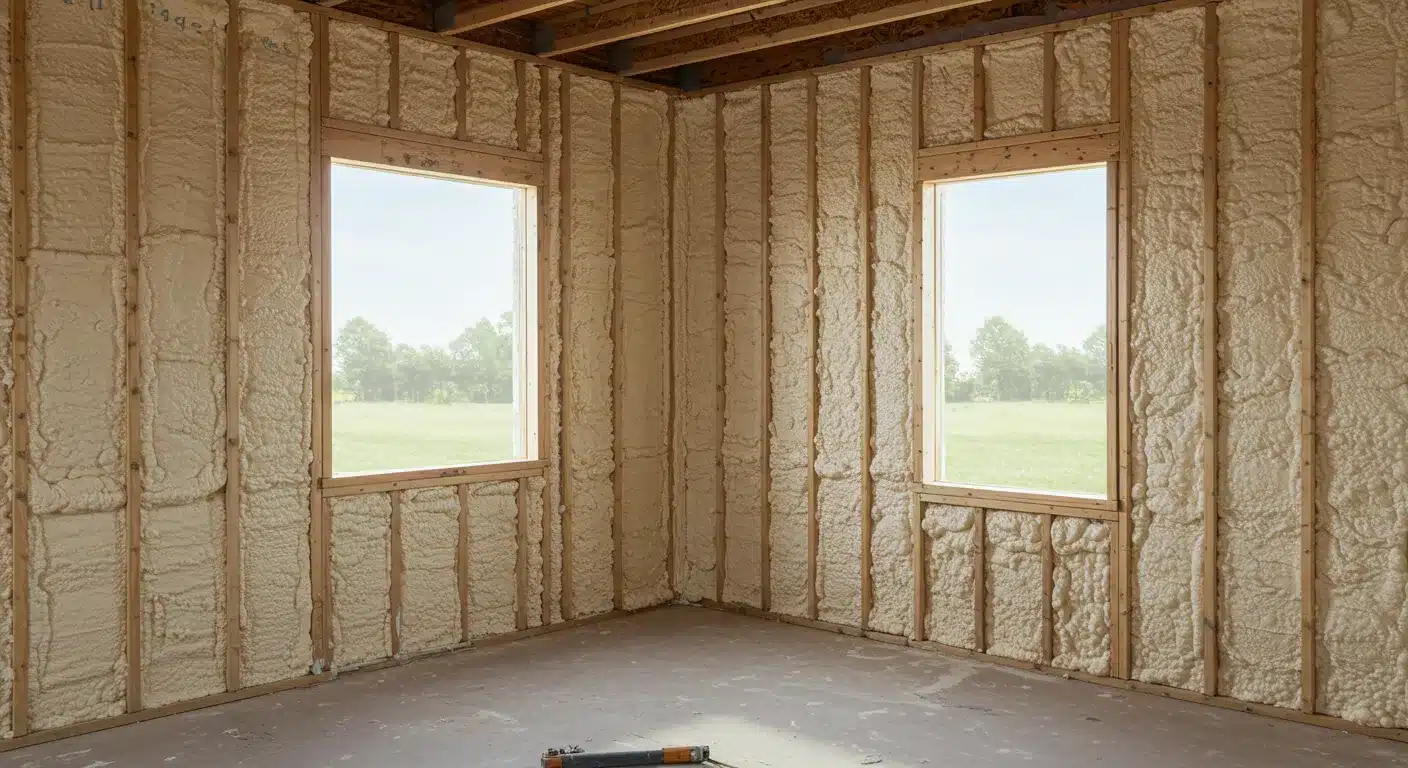
Spray foam insulation directly prevents structural damage from moisture by creating a continuous, monolithic barrier against both air and water vapor. In Bigfork’s climate, characterized by significant temperature swings, snowmelt, and proximity to Flathead Lake, uncontrolled moisture is a primary cause of wood rot, mold growth, and compromised structural integrity. Unlike traditional insulation, closed-cell spray foam adheres to surfaces and expands, sealing the gaps, cracks, and joints that allow moist air to enter a building’s structure. This process stops condensation from forming inside walls and crawl spaces, which is the root cause of many long-term moisture problems.
This article explains the mechanics of how spray foam works to protect a home’s frame, foundation, and roof structure from moisture damage. The information presented here comes from extensive field experience addressing insulation and moisture-related issues specific to homes in the Flathead Valley.
Understanding Bigfork’s Moisture Challenges
Homes in the Bigfork area face unique environmental pressures. The combination of cold, snowy winters and humid summers creates a constant battle against moisture intrusion. Freeze-thaw cycles can create or worsen small cracks in foundations and building materials. Heavy snowpack and spring runoff can saturate the ground, increasing hydrostatic pressure against basement walls and crawl spaces.
Moisture finds its way into a home’s structure through several common pathways:
Air Leakage: Gaps around windows, doors, and penetrations for pipes or wiring allow warm, humid indoor air to travel into colder wall cavities, where it condenses.
Foundation Wicking: Concrete foundations can absorb moisture from the surrounding soil, which then evaporates into a basement or crawl space.
Vapor Diffusion: Water vapor can move directly through porous building materials like wood and drywall.
Once inside the building envelope, this moisture can lead to serious problems, including deteriorating wood, rusting metal fasteners, and the growth of mold, which can affect both the home’s structure and its indoor air quality.
How Spray Foam Creates a Moisture Barrier
The effectiveness of spray foam, particularly the closed-cell variety, comes from its unique physical properties. When installed, it acts as three control layers in one application: an insulator, an air barrier, and a vapor retarder.
The Science of Closed-Cell Spray Foam
Closed-cell spray polyurethane foam (ccSPF) is a dense, rigid material made of millions of tiny, sealed plastic cells filled with a non-insulating gas. A report from the U.S. Department of Energy explains that these closed cells are what make the foam highly resistant to water absorption. Because the cells are sealed, water cannot move through the foam. This gives it a very low vapor permeance, meaning it effectively stops water vapor from passing through. This property is critical for preventing moisture from reaching and damaging the home’s sheathing and framing.
Sealing Gaps and Eliminating Condensation
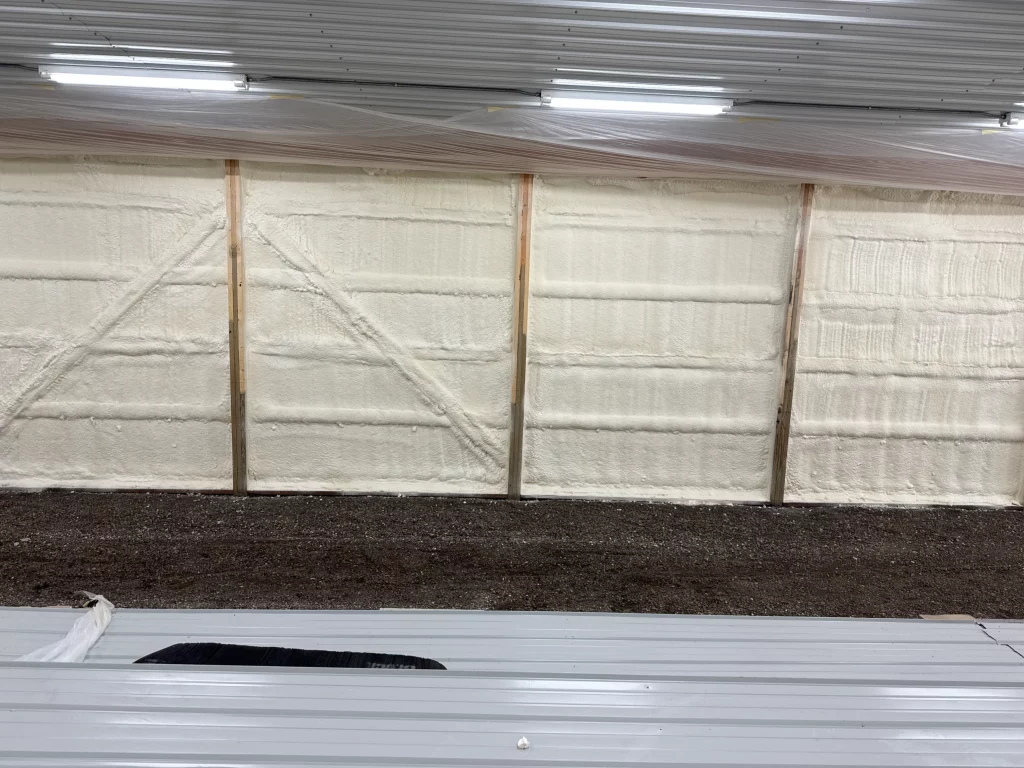
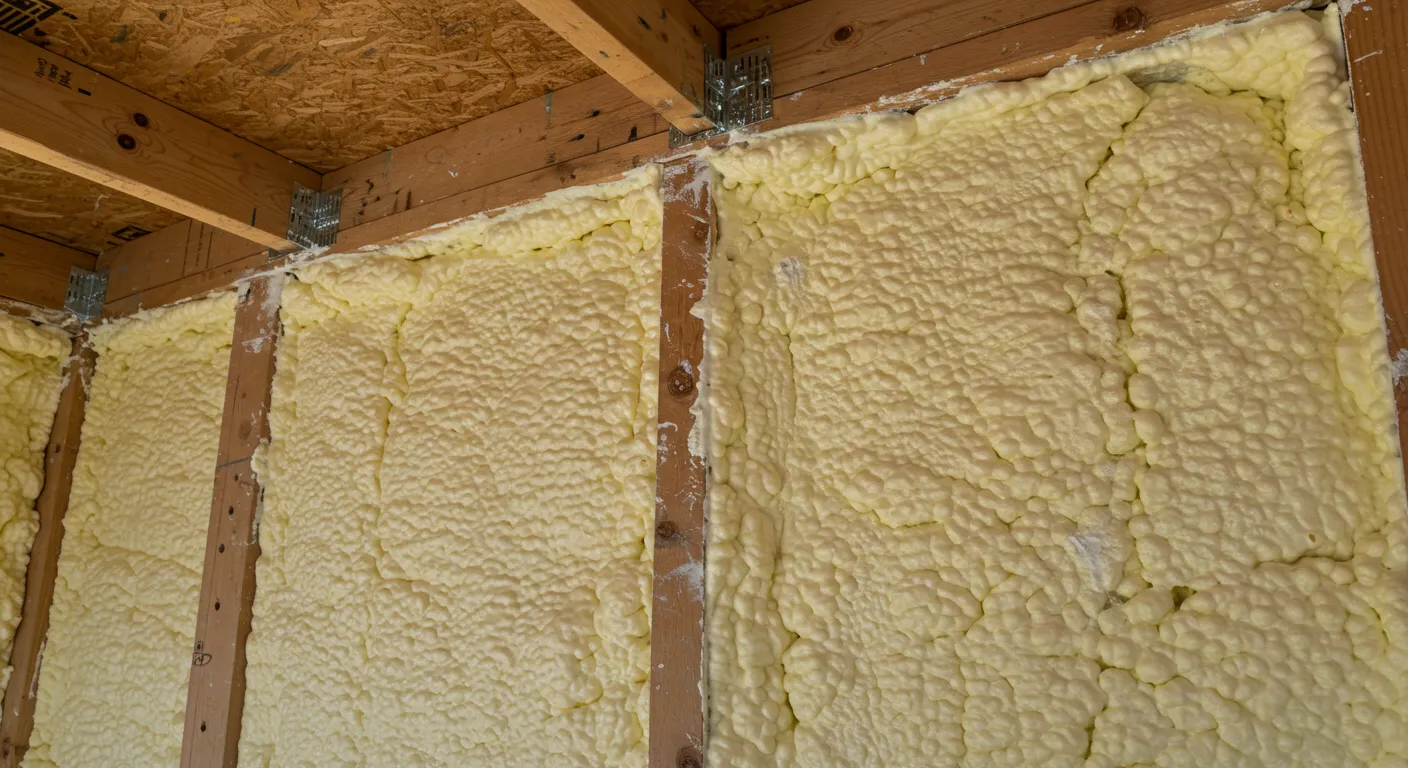
When professionally applied, spray foam insulation expands up to 30-60 times its liquid volume before curing. This expansion allows it to fill every void, no matter how small. This creates a perfect air seal.
By stopping air movement, spray foam also stops condensation within the building envelope. Condensation happens when warm, moist air makes contact with a surface that is below the dew point temperature. By insulating the interior side of the building sheathing, spray foam keeps that surface warm, preventing the temperature drop that causes water vapor to turn into liquid water.
Comparing Insulation Types for Moisture Resistance
Not all insulation materials handle moisture equally well. The choice of insulation can significantly impact a home’s ability to manage moisture and prevent long-term damage. The table below compares common insulation types based on their moisture-handling characteristics.
Feature
Closed-Cell Spray Foam
Fiberglass Batts
Cellulose (Blown-in)
Water Absorption
Very Low (Acts as a barrier)
High (Loses R-value when wet)
High (Can hold and trap moisture)
Air Permeability
Very Low (Forms an air seal)
High (Allows air to pass through)
Medium (Reduces airflow but not a seal)
Vapor Permeance
Low (Class II Vapor Retarder)
High (Allows vapor to pass)
High (Allows vapor to pass)
Mold Resistance
High (Inert plastic material)
Low (Paper facing is a food source)
Medium (Treated with borates)
Common Areas for Moisture Intrusion in Bigfork Homes
Certain parts of a house are more susceptible to moisture problems than others, especially in a climate like Bigfork’s.
Crawl Spaces and Basements
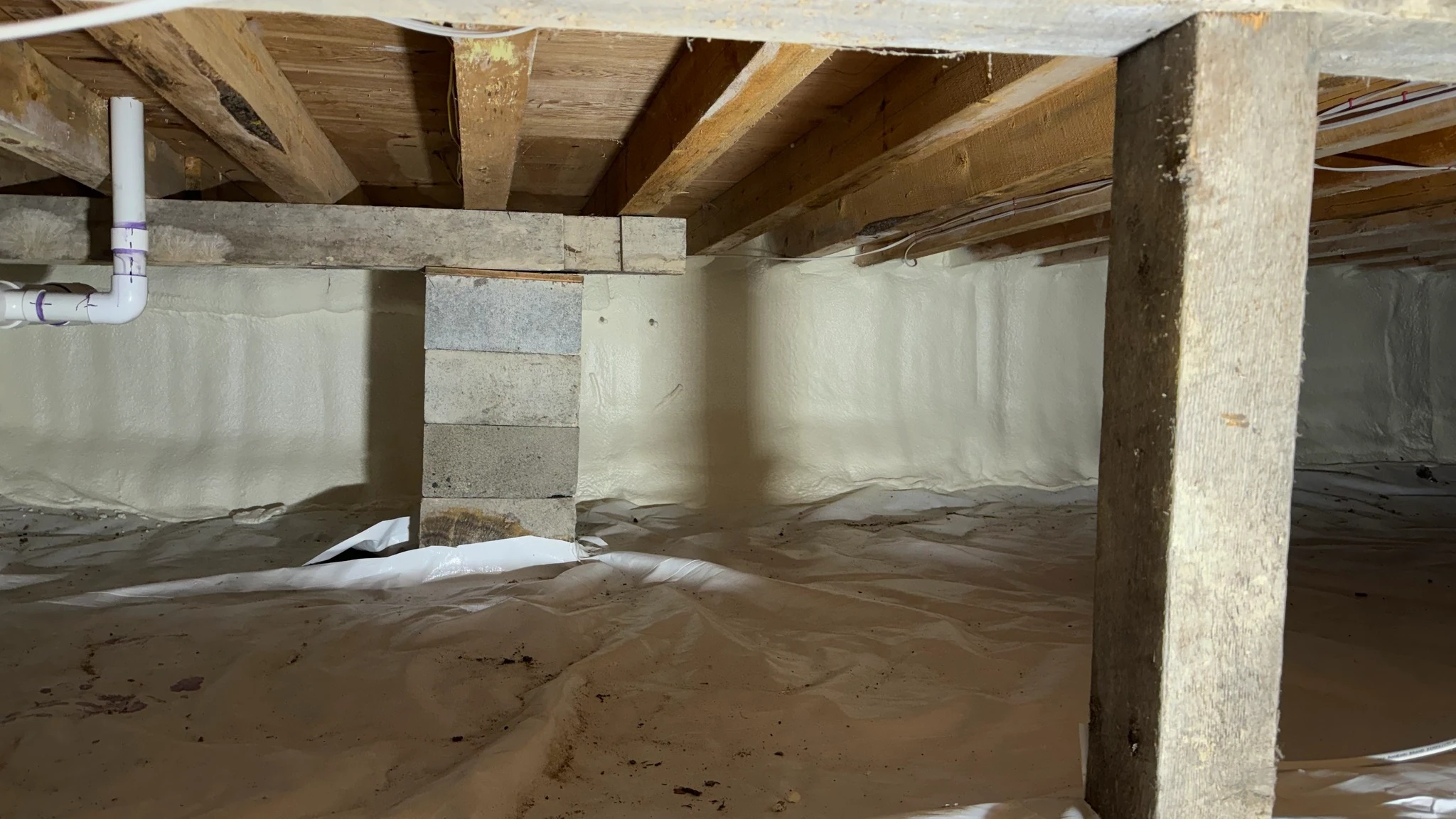
Below-grade spaces are a major point of entry for ground moisture. Applying closed-cell spray foam to foundation walls and rim joists isolates the home from the damp earth. This process, known as encapsulation, creates a clean, dry space and prevents musty odors and mold from migrating into the living areas above.
Bonus Tip: Before encapsulating a crawl space, it’s important to address any bulk water issues. This means ensuring gutters are clean and directing water away from the foundation and that the ground is graded properly.
Attics and Rooflines
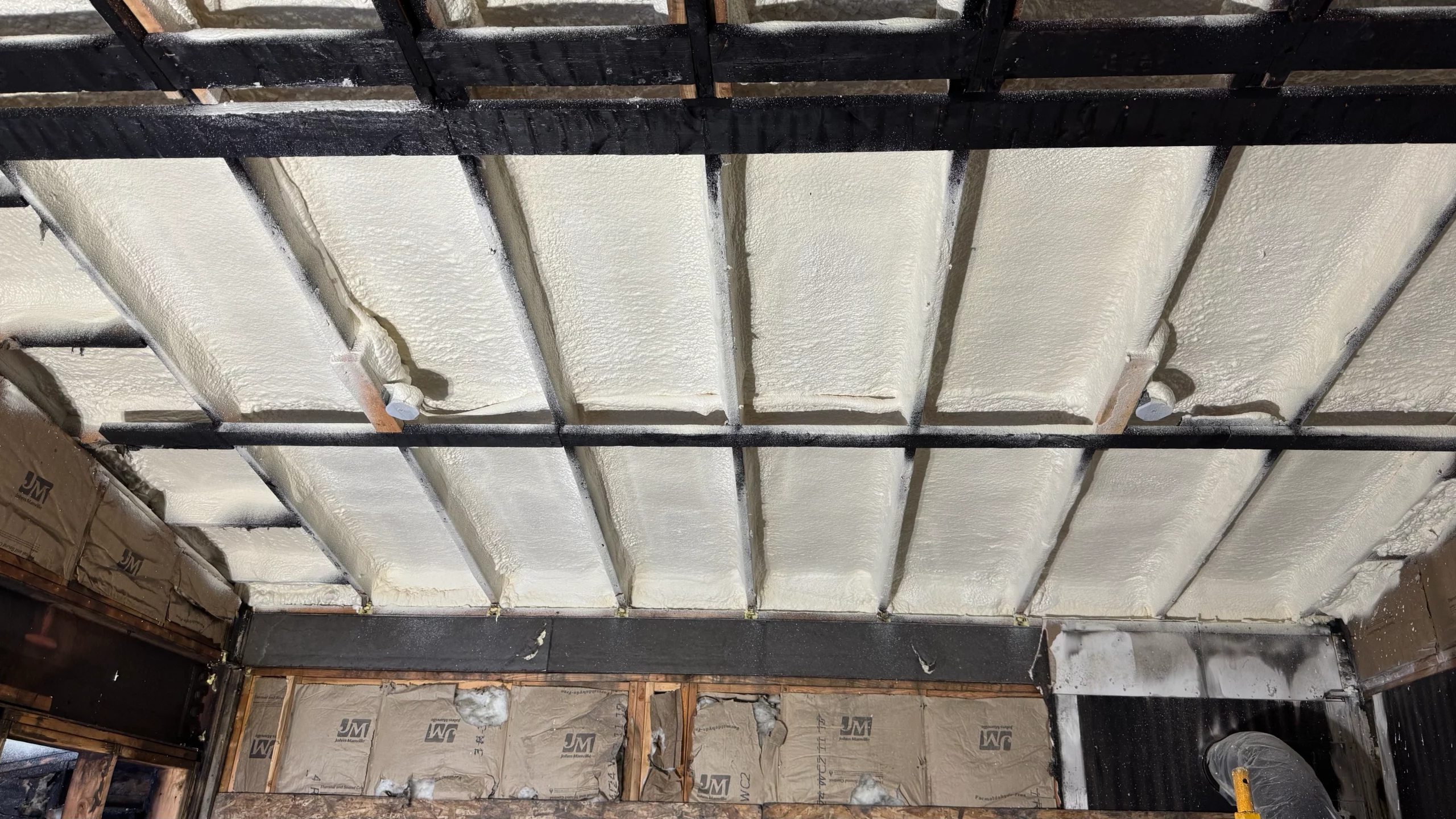
In winter, warm air leaking into a cold attic can cause significant problems. It can melt the snow on the roof from underneath, leading to the formation of ice dams at the eaves. These dams block water from draining properly, causing it to back up under the shingles and leak into the attic and walls. Applying spray foam directly to the underside of the roof deck creates a conditioned attic, eliminating the air leakage that causes ice dams.
Rim Joists
The rim joist, where the wooden structure of the house sits on top of the foundation, is one of the most significant sources of air and moisture leakage in a home. Sealing this area with spray foam is a simple yet highly effective way to improve comfort, reduce energy bills, and stop moisture infiltration at a key structural point.
Things to Consider Before Making a Decision
Choosing the right insulation involves more than just picking a material.
Type of Spray Foam
There are two main types: open-cell and closed-cell. Open-cell foam is lighter, more flexible, and a good air barrier, but it is vapor-permeable. Closed-cell foam is rigid, a powerful insulator, and acts as a vapor retarder, making it the superior choice for areas with high moisture potential like basements, crawl spaces, and rim joists.
Building Code Requirements
Proper installation must adhere to local building codes. The International Residential Code provides standards for insulation installation, including the requirement for a thermal or ignition barrier (like drywall) to be placed over spray foam in most applications. A qualified contractor will be familiar with these local requirements.
Professional Application
The performance of spray foam is entirely dependent on the quality of the installation. The chemicals must be mixed at the correct temperature and ratio and applied at the proper thickness. This requires specialized equipment and training. An improper application can result in poor performance and even odors, so selecting an experienced installer is essential.
Protecting Your Bigfork Property for the Long Term
In Bigfork, protecting a home from moisture is not a luxury; it’s a necessity for preserving the building’s value and structural health. Spray foam insulation provides a lasting solution by creating a complete air and moisture barrier where it’s needed most. It stops the destructive cycle of condensation within walls and crawl spaces, preventing the conditions that lead to rot and mold. Before making any decisions, it’s wise to evaluate your home’s specific vulnerabilities and long-term goals.
Get a Professional Assessment
For homeowners in the Bigfork area wanting to understand their property’s specific needs, a professional assessment is the best next step. A thorough evaluation can identify critical areas for air and moisture leakage and determine the most effective solution. To discuss how to protect your home’s structure, contact Wegner Insulation by phone at (406) 654-4636 or via email at [email protected] for a detailed evaluation.
Sources
U.S. Department of Energy – Provides consumer-facing information on the types, benefits, and applications of spray foam insulation.
International Code Council – Publishes the International Residential Code (IRC), which sets the standard for building safety and material use in residential construction.
Federal Emergency Management Agency (FEMA) – This technical bulletin outlines the requirements for materials used in flood-prone areas and lists closed-cell spray foam as an acceptable flood damage-resistant material.
FAQS
Can spray foam trap moisture?
If spray foam is applied over a surface that is already wet or has an active leak, it can trap that moisture. It is designed to prevent moisture from getting into a structure, not to fix an existing water problem. Any sources of bulk water leakage must be repaired before insulation is installed.
Is closed-cell spray foam completely waterproof?
Closed-cell spray foam is highly resistant to water. In fact, a technical bulletin from the Federal Emergency Management Agency (FEMA) classifies it as a flood-resistant material because it can be submerged in water, cleaned, and dried without being replaced. It is not, however, a substitute for exterior waterproofing systems.
How does spray foam affect a home’s breathability?
By creating a very tight air seal, spray foam significantly reduces uncontrolled air leakage. This is great for energy efficiency, but means the home can no longer “breathe” on its own. In a tightly sealed home, a mechanical ventilation system, such as a heat recovery ventilator (HRV), may be needed to ensure a continuous supply of fresh, healthy air.
What is the lifespan of spray foam insulation?
When installed correctly, spray foam insulation does not shrink, settle, or degrade over time. It is an inert polymer that physically adheres to the structure. Its insulating and air-sealing properties should last for the life of the building.
Does spray foam off-gas?
Spray foam does release vapors during the application and curing process. Professional installers use ventilation fans and wear protective gear to manage this. Once cured, typically within 24 hours, modern spray foam products are inert and stable, with very low volatile organic compound (VOC) emissions.
Can spray foam be used in older homes?
Yes, spray foam is often an excellent solution for retrofitting older homes. It is particularly effective at sealing the drafty, irregular cavities often found in older construction, dramatically improving both energy efficiency and moisture control.
Spray foam insulation delivers superior indoor comfort in Kalispell homes by maintaining consistent temperatures year-round and eliminating drafts and moisture…