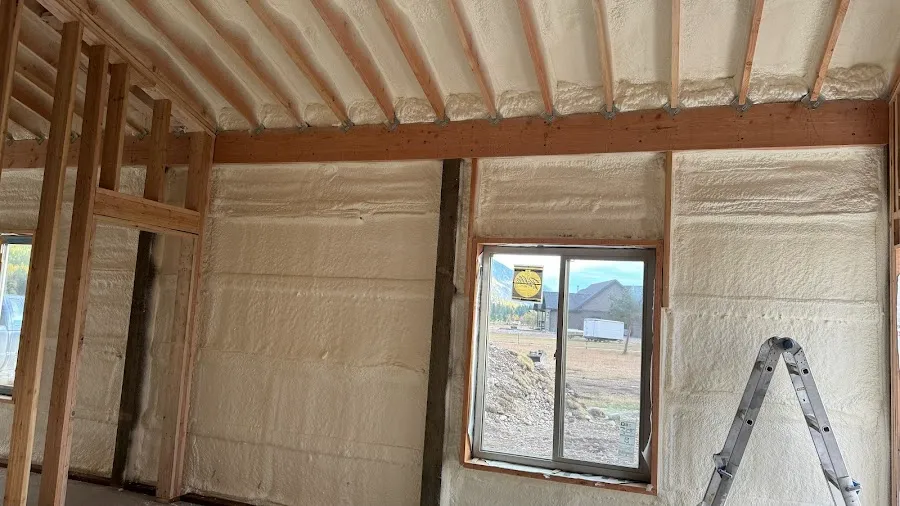
Top Residential Spray Foam Installation Services in Seeley Lake, MT
admin-wegnerinsulation
March 31st, 2026
Finding the right spray foam insulation contractor in Seeley Lake, MT requires understanding how this insulation method performs in extreme cold climates, what credentials separate qualified professionals from general contractors, and which application types deliver the best return on investment for your specific home configuration. Seeley Lake’s location in Montana’s cold climate zone demands insulation that exceeds standard building code requirements, making spray foam an increasingly popular choice for homeowners seeking long-term energy efficiency and comfort improvements. The right installation service combines proper certifications, climate-specific experience, and transparent pricing to deliver measurable energy savings of 20-50% on heating and cooling costs.
TLDR / Key Takeaways
Spray foam insulation reduces energy bills by 20-50% in cold climates like Seeley Lake, with typical payback periods of 5-7 years
Montana’s energy code requires R-49 ceiling insulation and R-20+ wall insulation, with spray foam exceeding these standards in less space
Closed-cell spray foam delivers higher R-value per inch (R-6 to R-7) compared to open-cell (R-3.5 to R-3.8), making it ideal for Seeley Lake’s harsh winters
Qualified contractors should hold SPFA (Spray Polyurethane Foam Alliance) certification or equivalent training credentials
Proper installation quality depends 70% on contractor skill and 30% on product quality, making contractor selection critical
Attic applications offer the highest ROI, as attics account for approximately 50% of residential heat loss
Look for contractors who provide detailed energy assessments, written warranties, and transparent pricing breakdowns
Local climate experience matters more than national brand recognition when selecting an installation service
What Makes Spray Foam Ideal for Seeley Lake’s Climate
Seeley Lake sits in Montana’s Climate Zone 6, where winter temperatures regularly drop below freezing and heating costs dominate annual energy expenses. Traditional fiberglass or cellulose insulation often struggles to maintain consistent R-values in these conditions, particularly when air leakage undermines thermal performance. Spray foam insulation addresses both thermal resistance and air sealing in a single application, creating a continuous barrier against heat loss that conventional insulation cannot match.
The Montana Department of Environmental Quality recommends ceiling insulation values of R-49 or higher for new construction and major renovations. Spray foam achieves these requirements with significantly less thickness than batt insulation, preserving valuable living space while delivering superior thermal performance. For Seeley Lake homeowners, this translates to faster installation, less disruption, and more usable square footage compared to traditional insulation methods.
Cold climate performance extends beyond R-value measurements. Spray foam’s air sealing properties prevent convective heat loss through gaps, cracks, and thermal bypasses that account for substantial energy waste in conventionally insulated homes. During Seeley Lake’s long heating season, this air barrier function proves as valuable as the insulation value itself, reducing the workload on heating systems and eliminating cold spots that compromise comfort.
Climate-Specific Advantages
Montana’s temperature swings between seasons create unique insulation challenges. Spray foam’s structural adhesion prevents settling and gap formation over time, maintaining consistent performance through freeze-thaw cycles that degrade other insulation materials. This durability factor proves particularly valuable in Seeley Lake, where roof decks, rim joists, and crawl spaces experience extreme temperature variations throughout the year, making spray foam for homes a reliable choice for long-term performance.
Types of Spray Foam and Their Applications
Foam Type
R-Value Per Inch
Best Applications
Cost Range
Key Benefits
Closed-Cell
R-6.0 to R-7.0
Exterior walls, roofs, crawl spaces
Higher
Maximum R-value, moisture barrier, structural strength
Open-Cell
R-3.5 to R-3.8
Interior walls, attics, soundproofing
Lower
Flexibility, vapor permeability, cost-effective
Hybrid Systems
Varies
Whole-house applications
Moderate
Optimized performance, balanced cost
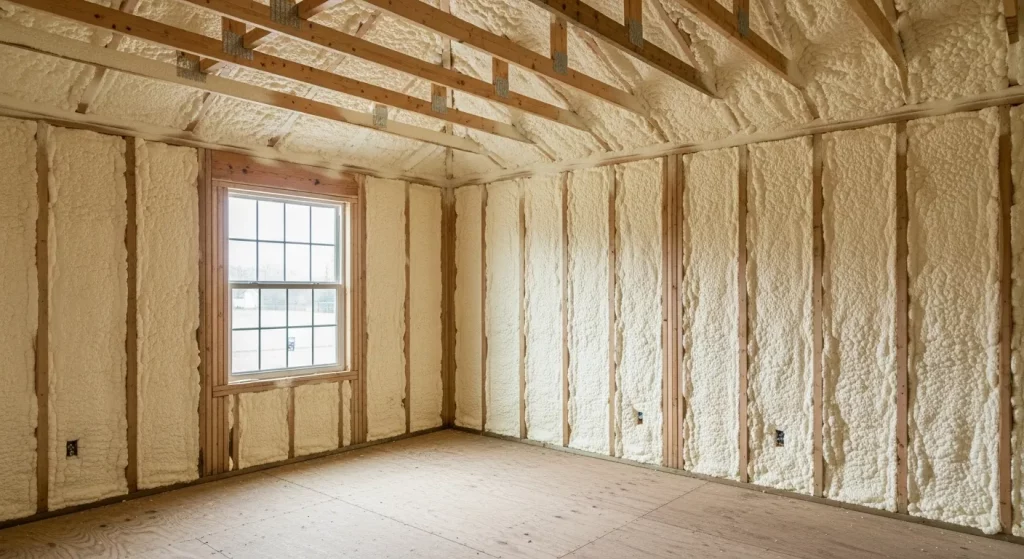
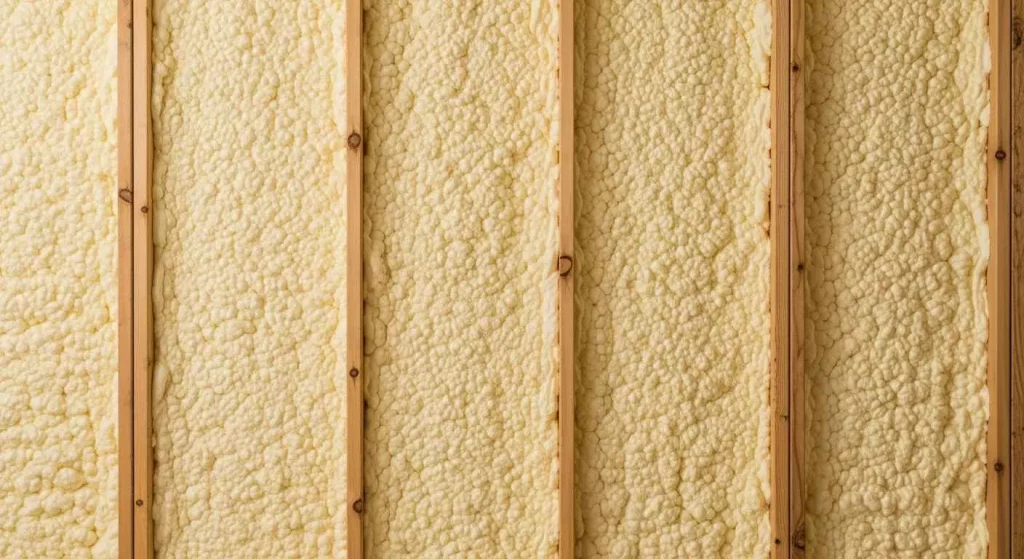
Closed-cell spray foam delivers the highest R-value per inch available in residential insulation, making it the preferred choice for Seeley Lake homes where space constraints meet extreme cold. This rigid foam expands minimally during application, creating a dense thermal barrier that adds structural strength to walls and roof assemblies. The material’s low permeability also functions as a vapor retarder, protecting against moisture intrusion in below-grade and exterior applications.
Open-cell spray foam offers a more economical option for applications where maximum R-value per inch matters less than complete air sealing and sound absorption. This flexible foam expands dramatically during installation, filling irregular cavities and around obstructions that challenge rigid insulation materials. For Seeley Lake homeowners insulating interior walls, attic floors, or sound-sensitive areas, open-cell provides effective thermal performance at a lower installed cost.
Application-Specific Recommendations
Attic Insulation: Closed-cell spray foam applied directly to the underside of roof decks creates a conditioned attic space that eliminates heat loss through the building envelope. This approach outperforms traditional attic floor insulation by preventing thermal bypasses and maintaining consistent temperatures throughout the building envelope. According to the National Renewable Energy Laboratory, basement and wall insulation improvements in Montana homes deliver annual savings ranging from $178 to $302 per year, with spray foam attics offering even greater returns.
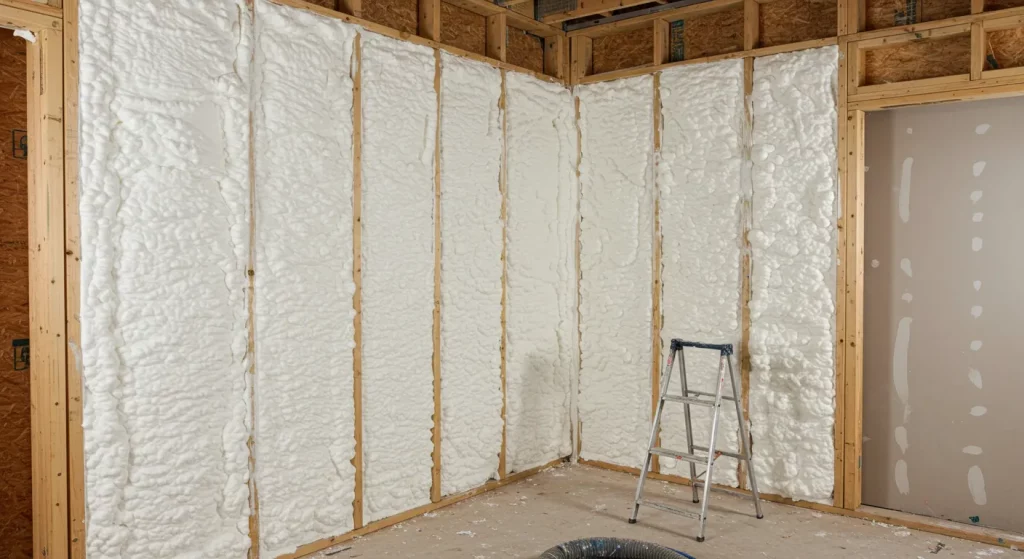
Wall Cavities: Both foam types work effectively in wall applications, with closed-cell preferred for exterior walls facing harsh weather exposure and open-cell suitable for interior partition walls where sound dampening adds value.
Crawl Spaces and Basements: Closed-cell spray foam’s moisture resistance makes it the only appropriate choice for below-grade applications in Seeley Lake’s variable humidity conditions.
Evaluating Installation Quality and Contractor Credentials
Beyond certifications, experienced contractors demonstrate building science knowledge that informs proper installation techniques. Understanding vapor drive, thermal bridging, and air barrier continuity separates qualified spray foam professionals from contractors who simply apply product without considering whole-house performance. Ask prospective contractors to explain their approach to detailing around windows, doors, electrical boxes, and other penetrations that require attention beyond standard spray application.
Questions to Ask Potential Contractors
What certifications and training do your installation technicians hold?
How many residential spray foam projects have you completed in Climate Zone 6 or similar conditions?
What is your process for assessing existing insulation and air leakage before recommending spray foam solutions?
Do you provide written warranties covering both materials and workmanship?
Can you supply references from Seeley Lake area homeowners with similar projects?
Insurance coverage specifically including spray foam installation represents another critical credential often overlooked by homeowners. General contractor liability policies may exclude coverage for specialty insulation work, leaving homeowners financially exposed if installation defects cause property damage or require remediation. Request certificates of insurance that explicitly list spray foam installation as a covered activity.
Cost vs. Long-Term ROI Analysis
Spray foam insulation typically costs $1.50 to $3.50 per board foot installed, with closed-cell foam at the higher end due to material density and application complexity. For a typical Seeley Lake home requiring whole-house insulation, total project costs range from $8,000 to $20,000 depending on square footage, foam type, and application scope. While this investment exceeds traditional insulation costs by 2-3 times, the long-term financial picture favors spray foam in cold climate applications.
Energy savings from spray foam installation typically range from 20-50% of heating and cooling costs, according to industry data compiled by Superior Spray Foam. For Seeley Lake homeowners spending $2,000 to $3,500 annually on heating, this translates to $400 to $1,750 in annual savings. Simple payback calculations show most spray foam investments recovering costs within 5-7 years, with continued savings accumulating over the insulation’s 20-30 year effective lifespan.
ROI Comparison Table
Insulation Type
Installed Cost
Annual Energy Savings
Payback Period
Lifespan
Fiberglass Batt
$1,500 – $3,000
$200 – $400
5-8 years
15-20 years
Cellulose Blow-In
$2,000 – $4,000
$300 – $500
6-8 years
20-25 years
Open-Cell Spray Foam
$5,000 – $12,000
$400 – $900
6-10 years
20-30 years
Closed-Cell Spray Foam
$8,000 – $20,000
$600 – $1,750
5-7 years
25-30+ years
Visual Suggestion: Line chart comparing cumulative energy savings over 20 years for four insulation types, showing crossover points where spray foam’s higher initial investment is offset by superior long-term performance.
Beyond direct energy savings, spray foam insulation adds value through improved comfort, reduced HVAC maintenance, and potential home resale premium. Home buyers in cold climate markets increasingly recognize spray foam as a premium feature that signals lower operating costs and higher comfort standards.
Signs You’ve Found the Right Installation Service
Quality spray foam contractors distinguish themselves through transparent communication, detailed proposals, and willingness to educate customers about the installation process. Red flags include pressure tactics, vague pricing, reluctance to provide references, or unwillingness to explain technical aspects of the proposed work. The right contractor welcomes questions about their methods, materials, and credentials because they understand that educated customers make better decisions.
Professional contractors conduct thorough site assessments before providing quotes, examining existing insulation, identifying air leakage points, and evaluating moisture conditions that affect installation approach. This assessment process demonstrates the contractor’s commitment to whole-house performance rather than simply applying product without consideration for building science principles.
Indicators of Contractor Quality
Detailed written proposals specifying foam type, thickness, coverage area, and R-value targets
Clear explanation of preparation requirements, timeline, and homeowner responsibilities
Willingness to discuss alternative approaches and explain why specific recommendations fit your situation
Professional safety protocols including ventilation, protective equipment, and occupancy restrictions during installation
Follow-up service and warranty support documentation
Local experience in Seeley Lake or similar Montana communities provides contractors with practical knowledge about regional building practices, climate challenges, and code requirements that national companies may lack. Ask contractors about specific challenges they’ve encountered in local projects and how they addressed those situations.
Recommendations by Homeowner Situation
Home Type
Recommended Approach
Priority Areas
Expected ROI
New Construction
Closed-cell whole house
Walls, roof deck, foundation
Highest – integrated design maximizes value
Older Home Retrofit
Attic first, then walls
Attic, rim joists, crawl space
Strong – attic alone can reduce heat loss 40%
Partial Insulation Upgrade
Target problem areas
Rim joists, attic, cathedral ceilings
Moderate – focused approach addresses specific issues
Vacation/Seasonal Home
Closed-cell throughout
All exterior surfaces
High – prevents frozen pipes, reduces maintenance
Homeowners planning new construction should work with spray foam contractors early in the design process to optimize building envelope details and maximize insulation effectiveness. This integrated approach often costs less than retrofit installations while delivering superior thermal performance.
Get Expert Spray Foam Installation in Seeley Lake
Wegner Insulation specializes in residential spray foam installation designed specifically for Montana’s demanding climate conditions. Our certified technicians understand the unique challenges Seeley Lake homeowners face, from extreme cold to temperature swings that test building envelope performance. We provide comprehensive energy assessments, transparent pricing, and detailed proposals so you understand exactly what you’re getting and why it matters for your home’s comfort and efficiency.
Schedule your consultation today to discover how spray foam insulation can reduce your energy costs, improve comfort, and add lasting value to your Seeley Lake home.
Frequently Asked Questions
How long does spray foam insulation installation take?
Most residential spray foam projects are completed within one to three days, depending on the scope and accessibility. Whole-house installations typically require two days, while attic-only applications may finish in a single day with proper crew and equipment.
Can spray foam be installed in existing homes?
Yes, spray foam works effectively in retrofit applications, including attics, crawl spaces, rim joists, and wall cavities. Experienced contractors use specialized equipment to access existing building cavities without major demolition, making spray foam viable for older Seeley Lake homes.
What is the difference between open-cell and closed-cell spray foam?
Closed-cell foam delivers a higher R-value per inch and acts as a vapor barrier, making it ideal for exterior applications and below-grade spaces. Open-cell foam costs less and provides excellent air sealing with flexibility, suiting interior applications where maximum R-value is not required.
Will spray foam insulation reduce my heating bills?
Spray foam typically reduces heating and cooling costs by 20-50%, depending on your home’s existing insulation, air leakage, and HVAC efficiency. Seeley Lake homeowners often see the greatest savings during winter months when heating demands peak.
Is spray foam insulation safe for my family?
Properly installed spray foam is safe and inert once cured, typically within 24 hours of application. Professional contractors use ventilation and temporary occupancy restrictions during installation to ensure safe curing conditions. Once cured, spray foam does not off-gas or release particles into living spaces.
For homeowners in Pablo, Montana, spray foam insulation delivers superior energy efficiency and long-term cost savings compared to traditional fiberglass…