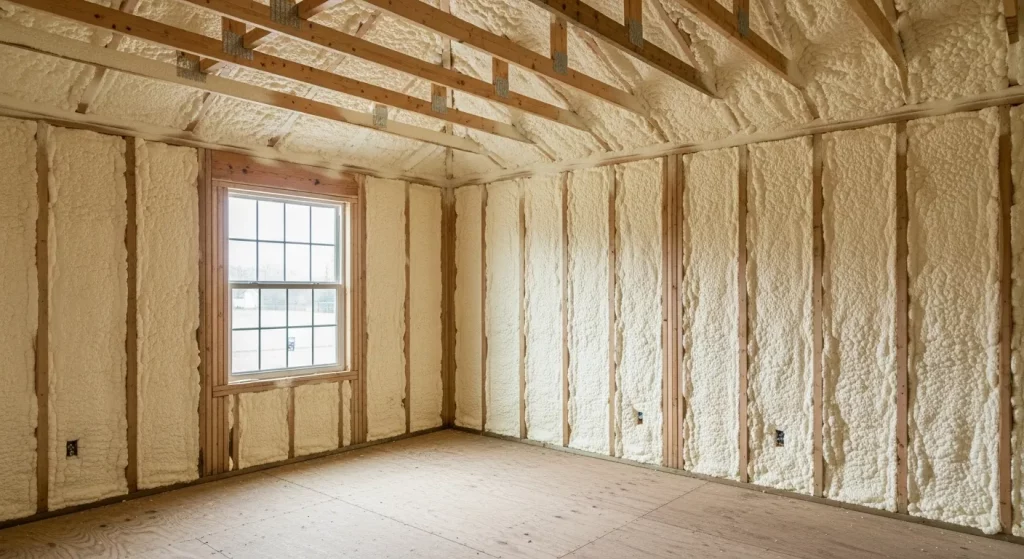
The Complete Guide to Residential Spray Foam Insulation: Enhancing Home Comfort
admin-wegnerinsulation
March 31st, 2026
Homeowners across the country face a common frustration: uneven temperatures throughout the house, skyrocketing energy bills, and that nagging draft that makes certain rooms uncomfortable no matter how high the thermostat is set. These issues often point to one underlying problem: inadequate insulation and air sealing. Spray foam insulation addresses both concerns in a single solution, making it one of the most effective options for residential properties today.
This guide covers everything you need to know about spray foam insulation, from the basic science behind how it works to the practical considerations of installation and cost. Whether building a new home or upgrading an existing one, understanding this insulation method will help you make informed decisions about your home’s comfort and efficiency, especially when considering residential spray foam solutions for long-term performance and energy savings.
Spray foam insulation differs fundamentally from traditional insulation materials like fiberglass batts or blown cellulose. While those materials primarily slow heat transfer, spray foam creates both an insulating barrier and an air seal in one application. This dual function explains why it outperforms conventional options in both energy savings and comfort improvement.
Throughout this comprehensive resource, you will learn about the two main types of spray foam, where they work best in residential applications, the installation process, cost considerations, and how to determine if this solution fits your specific situation. The information presented here draws from decades of field experience and the latest building science research, providing you with a practical roadmap for enhancing your home’s performance.
Understanding Spray Foam Insulation: The Fundamentals
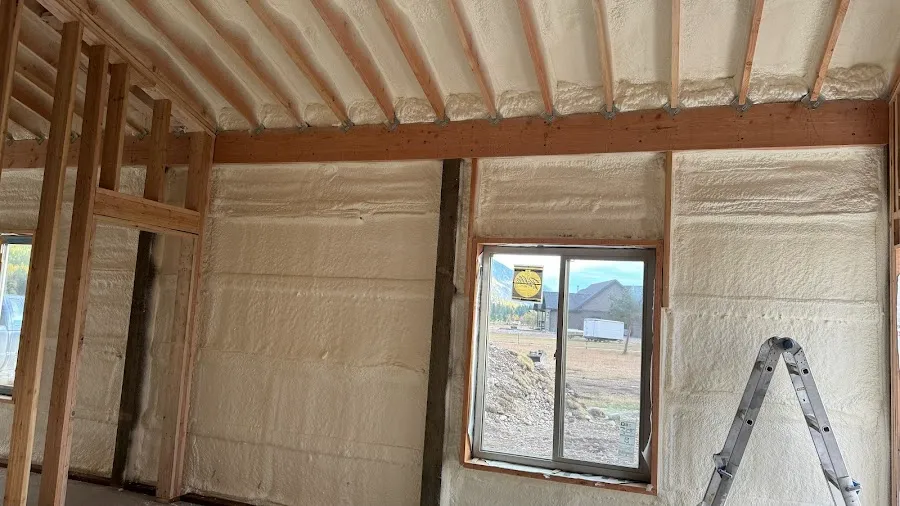
Spray foam insulation starts as a liquid mixture that expands and hardens after application. Two chemical components, typically referred to as Side A and Side B, combine at the spray nozzle and react almost instantly. This reaction creates a foam that expands to fill cavities, cracks, and gaps, then cures into a solid cellular structure.
The expansion process is what makes this material so effective. Traditional insulation materials leave small gaps and voids, even when properly installed. Spray foam expands up to 100 times its liquid volume, pushing into every corner and creating a complete seal. This characteristic eliminates the thermal bridges that plague conventional insulation jobs.
Building scientists recognize two distinct functions that spray foam performs. First, it provides thermal resistance, measured by R-value, which slows the movement of heat through building assemblies. Second, it creates an air barrier that prevents the uncontrolled movement of air between conditioned and unconditioned spaces. This combination addresses what building performance experts call the “two largest sources of energy loss in most homes.”
The material also offers moisture control benefits, depending on the type used. Closed-cell spray foam acts as a vapor retarder when applied at sufficient thickness, helping manage moisture flow through building assemblies. This added benefit can prevent condensation issues that lead to mold growth and structural damage.
Types of Spray Foam Insulation
Open-Cell Spray Foam
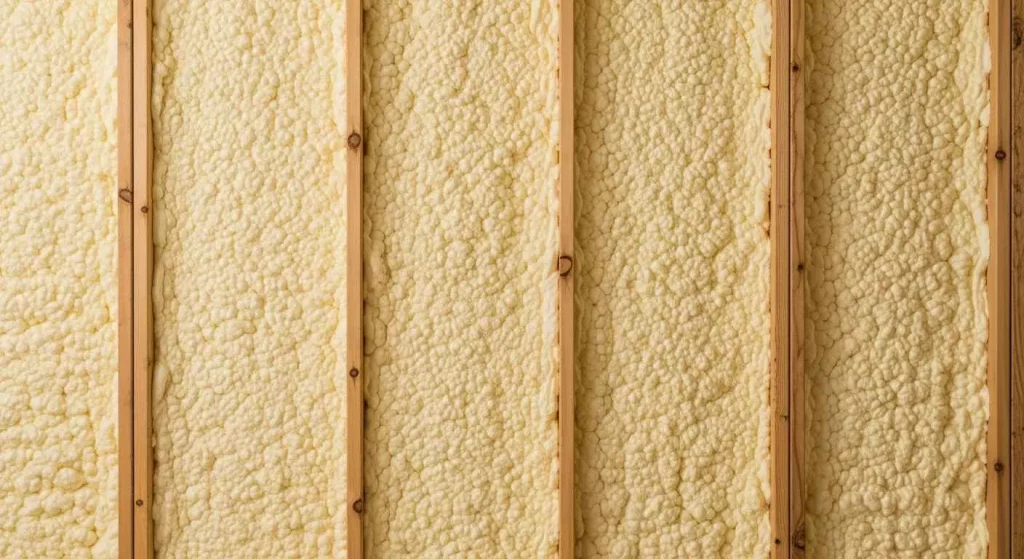
Open-cell spray foam gets its name from the structure of the cured foam cells. The cells remain intentionally open, creating a softer, more flexible material with a lower density. This type typically expands significantly, filling large cavities effectively.
The open cell structure means the foam contains more air and less actual insulating material per cubic foot. As a result, open-cell foam has a lower R-value per inch, usually around R-3.5 to R-3.8. To achieve the same thermal resistance as other options, you need a greater thickness of material.
Despite the lower R-value, open-cell foam offers advantages in specific applications. The lower cost per board foot makes it economical for large cavities where thickness is not an issue. The material’s flexibility allows it to accommodate minor building movement without cracking or separating from substrates. Open-cell foam also allows moisture vapor to pass through more readily, which can be beneficial in certain climate zones when paired with proper moisture management strategies.
Closed-Cell Spray Foam
Closed-cell foam features cells that remain completely sealed after curing. This structure creates a denser, harder material with significantly higher R-value per inch, typically R-6 to R-7. The closed cells trap gas inside, which provides better insulating properties than the air trapped in open-cell foam.
The density and structure of closed-cell foam provide benefits beyond thermal performance. The material adds structural strength to walls and roofs, with some products increasing rack strength by up to 300 percent when applied to wall assemblies. This characteristic makes it particularly valuable in areas prone to high winds or seismic activity.
Closed-cell foam also serves as an effective vapor retarder when applied at the proper thickness, typically around 1.5 to 2 inches depending on the specific product. This dual function eliminates the need for separate vapor barrier materials in many applications, simplifying the construction process.
The higher material cost per board foot means closed-cell foam requires careful consideration of where to apply it for maximum benefit. However, the combination of high R-value, air sealing, vapor control, and structural enhancement often justifies the investment in the right applications.
Comparing Open-Cell and Closed-Cell Options
Characteristic
Open-Cell Foam
Closed-Cell Foam
R-Value Per Inch
R-3.5 to R-3.8
R-6 to R-7
Density
0.5 lb/cu ft
2.0 lb/cu ft
Air Barrier
Yes
Yes
Vapor Retarder
No
Yes (at proper thickness)
Flexibility
High
Low
Structural Benefit
Minimal
Significant
Relative Cost
Lower
Higher
Expert Tip: When choosing between open-cell and closed-cell foam, consider the cavity depth available. If you have limited space for insulation, closed-cell foam delivers more R-value per inch. For deep cavities where thickness is not a constraint, open-cell foam often provides a better cost-to-performance ratio.
Where Spray Foam Works Best in Residential Buildings
Attic Applications
Attics represent one of the most impactful locations for spray foam installation. Traditional insulation methods often fail in attics due to inconsistent coverage, compressed materials, and thermal bridging through framing members. Spray foam addresses all these issues simultaneously.
Two primary approaches exist for attic insulation. The vented attic approach leaves the space open to outside air and insulates the attic floor, separating the conditioned living space from the unconditioned attic above. The unvented, or conditioned, attic approach moves the thermal and air barrier to the roof deck, bringing the attic space inside the building envelope.
Conditioned attics created with spray foam offer several advantages. Air handlers and ductwork located in the attic now operate within conditioned space, eliminating the efficiency losses associated with running ducts through extreme temperatures. The consistent temperature also prevents the moisture problems that plague vented attics in certain climates.
A report from the Department of Energy indicates that properly insulating and air sealing attics can reduce heating and cooling costs by 15 to 50 percent, depending on climate and existing insulation levels. Spray foam’s combination of thermal resistance and air sealing makes it particularly effective in this application.
Crawl Spaces and Basements
Crawl spaces and basements often suffer from poor insulation and air sealing, leading to cold floors, moisture problems, and higher energy consumption. Spray foam applied to crawl space walls and the underside of floors above creates an effective barrier against ground moisture and outside air.
For crawl spaces, two strategies work well. Applying closed-cell foam directly to the crawl space walls encapsulates the area and prevents moisture migration from the ground. Alternatively, spraying the underside of the floor above keeps the crawl space separate from conditioned space but still provides the necessary thermal and air barrier.
Basement walls benefit from spray foam applied directly to the foundation walls. This approach addresses several issues at once: thermal resistance, air sealing, and moisture control. The foam creates a continuous barrier without the gaps common with rigid foam board installations.
Wall Insulation
Walls present unique challenges for spray foam installation, particularly in existing homes. The enclosed wall cavities make access difficult, requiring specialized equipment and techniques. Despite the challenges, wall insulation with spray foam offers significant benefits.
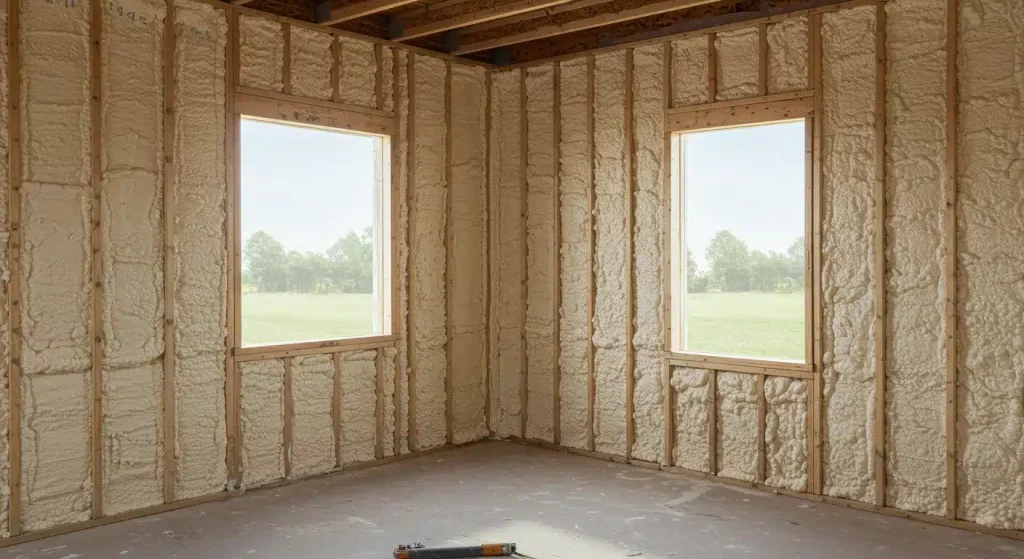
For new construction, spray foam applied to wall cavities provides complete fill and air sealing. Open-cell foam works well in standard depth wall cavities, while closed-cell foam might be specified for thinner walls where maximum R-value is needed in minimal space.
Existing walls can be insulated with spray foam using injection foam techniques. Small holes allow access to wall cavities, and specialized formulations flow into the space before expanding. This method requires careful attention to avoid overfilling, which can bow interior wall surfaces.
Rim Joists and Band Boards
Rim joists represent one of the most significant sources of air leakage in residential construction. The intersection of the foundation, sill plate, and floor framing creates multiple gaps that traditional insulation fails to address. Spray foam fills these irregular spaces completely.
A typical home might have dozens of linear feet of rim joist area, each representing a potential source of air infiltration and heat loss. Applying just a few inches of closed-cell foam to these areas provides an outsized benefit relative to the cost and effort involved.
Key Takeaways:
Attics offer the highest impact for spray foam, with potential energy savings of 15-50% when properly insulated and air sealed
Crawl spaces and basements benefit from spray foam’s dual ability to insulate and control moisture
Rim joists and other framing intersections represent disproportionate sources of energy loss that spray foam addresses effectively
The Installation Process: What to Expect
Proper installation separates a successful spray foam project from a failed one. The chemistry involved requires precise mixing ratios, proper temperatures, and appropriate application techniques. Understanding the installation process helps homeowners evaluate contractors and set realistic expectations.
Pre-Installation Preparation
The preparation phase sets the foundation for a successful installation. The substrate, the surface where foam will be applied, must be clean, dry, and free of contaminants. Dust, oil, and moisture can all interfere with adhesion and curing.
The chemical components used in spray foam require specific temperature ranges for proper reaction and curing. Both the chemicals and the substrate typically need to be between 60 and 80 degrees Fahrenheit, though requirements vary by manufacturer. Professional contractors use drum heaters and job site heaters to maintain appropriate conditions during cold-weather installations.
Moisture testing often precedes installation, particularly for concrete substrates. Excess moisture in concrete can prevent proper adhesion and potentially cause the foam to delaminate. Contractors use moisture meters to verify that surfaces meet the manufacturer’s specifications.
Personal protective equipment requirements during installation include respirators, protective suits, and gloves. The chemicals involved can cause respiratory and skin sensitization, so proper safety protocols protect both installers and occupants.
Application Techniques
The spray application itself requires skill and experience. The installer must maintain a consistent spray pattern and distance from the substrate. Too close, and the foam may not expand properly. Too far, and the material can separate or create an uneven surface.
Building up the foam in passes, rather than one thick application, ensures proper curing throughout. Pass thickness depends on the product, but installers typically apply layers between 0.5 and 2 inches thick, allowing each layer to cure before adding the next.
For closed-cell foam, the total thickness determines the R-value achieved and whether the foam reaches the thickness required for vapor retarder properties. Installers often apply closed-cell foam in multiple passes to reach the specified thickness without causing issues with heat buildup during curing.
Post-Installation Considerations
After installation, the foam needs time to fully cure. Most products reach full cure within 24 hours, though this varies with temperature and humidity. During curing, some products emit odors that should dissipate with proper ventilation.
Quality installation includes verification that the foam has achieved proper thickness and coverage. Some contractors use infrared thermography or blower door testing to confirm the effectiveness of the air seal and identify any areas that might need touch-up.
Trimming may be necessary if the foam expands beyond the framing depth. While this does not affect performance, it provides a flat surface for drywall or other finish materials.
Benefits Beyond Energy Savings
While reduced energy bills often drive the decision to upgrade insulation, spray foam delivers benefits that extend well beyond simple cost savings. Understanding these additional advantages helps homeowners evaluate the full value proposition.
Indoor Air Quality Improvements
Air sealing with spray foam reduces the infiltration of outdoor pollutants, allergens, and dust. Traditional insulation methods allow air to move through building assemblies, carrying these contaminants into living spaces. The air barrier created by spray foam dramatically reduces this uncontrolled airflow.
This benefit particularly affects households with allergy sufferers or respiratory conditions. By reducing the entry of pollen, dust, and other irritants, spray foam can contribute to a healthier indoor environment. Companies like Wegner Insulation implement precise air sealing techniques that help control indoor air quality while maintaining energy efficiency. However, it is important to note that effective air sealing means proper mechanical ventilation becomes essential to maintain healthy indoor air quality.
Moisture Control and Condensation Prevention
Closed-cell spray foam’s vapor retarder properties help manage moisture flow through building assemblies. This control prevents the condensation that can occur when warm, moist air meets cold surfaces within walls and attics.
Condensation inside building assemblies leads to mold growth, wood rot, and structural damage over time. By controlling both air movement and vapor diffusion, spray foam addresses the conditions that allow these problems to develop.
Noise Reduction
The density of spray foam, particularly closed-cell varieties, provides sound-dampening benefits. While not a replacement for dedicated acoustic treatments, the material reduces sound transmission through building assemblies.
Open-cell foam, with its softer structure, can actually outperform closed-cell foam for sound absorption in some applications. The open cells absorb sound waves rather than simply blocking transmission, making it effective for reducing noise transfer between rooms.
Structural Strength Enhancement
Closed-cell spray foam adds structural rigidity to the assemblies where it is applied. When bonded to roof decking, the foam helps the roof resist uplift forces during high winds. Wall assemblies with closed-cell foam demonstrate increased racking strength.
Research from the Spray Polyurethane Foam Alliance indicates that closed-cell foam can increase wall racking strength by up to 300 percent compared to uninsulated walls. This structural benefit adds value in regions subject to severe weather.
Expert Tip: When evaluating spray foam proposals, ask contractors about the specific products they use and the performance characteristics of those products. Not all spray foams are equal. Different formulations and densities affect R-value, vapor permeability, and fire resistance ratings.
Cost Considerations and Return on Investment
Spray foam insulation costs more per square foot than traditional insulation materials. This fact is unavoidable and should be acknowledged upfront. However, raw material cost comparisons fail to capture the full picture.
Understanding the Cost Structure
Spray foam pricing typically uses board feet as the unit of measure. One board foot equals one square foot of area covered by one inch of foam. A 1,000 square foot attic insulated with 6 inches of foam equals 6,000 board feet.
Closed-cell foam costs more per board foot than open-cell, but delivers a higher R-value per inch. This means achieving a given R-value might cost less with closed-cell foam in applications where cavity depth limits thickness.
Installed costs also include preparation, equipment, labor, and overhead. Professional installation is essential for spray foam, as the chemistry and application technique require specialized training and equipment.
According to data from HomeAdvisor, Spray foam insulation costs vary based on the type you choose, with closed-cell foam typically costing more than open-cell options due to its higher density and superior insulating properties.
Calculating Return on Investment
Energy savings provide the primary financial return from spray foam investment. The actual savings depend on climate, local energy costs, the existing insulation condition, and the efficiency of the heating and cooling equipment.
Homes with significant air leakage and minimal existing insulation see the greatest returns. The improvement from poor conditions to spray foam’s tight, well-insulated envelope can reduce heating and cooling costs by 30 to 50 percent.
Beyond energy savings, consider the value of improved comfort. Eliminating drafts, cold floors, and uneven temperatures improves quality of life. While difficult to quantify, this comfort factor often ranks as a primary benefit in post-installation surveys.
Spray foam also offers potential increases in home value. Energy-efficient homes command premium prices in many markets. The improved performance and reduced operating costs appeal to buyers increasingly concerned with energy efficiency.
Long-Term Value Considerations
Spray foam does not settle or degrade over time like some traditional insulation materials. Once installed, it maintains its performance for the life of the building. This longevity means the benefits continue indefinitely, unlike materials that lose effectiveness as they settle or compress.
The air sealing provided by spray foam also reduces wear on heating and cooling equipment. By reducing the heating and cooling loads, spray foam can extend equipment life and delay replacement costs.
Key Takeaways:
Energy savings of 30-50% are achievable in homes with poor existing insulation
Non-financial benefits include improved comfort, better air quality, and a potential home value increase
Common Challenges and How to Address Them
No building material is perfect, and spray foam insulation comes with its own set of potential challenges. Understanding these issues helps homeowners make informed decisions and ensures successful projects.
Installation Quality and Contractor Selection
The single biggest factor in spray foam performance is installation quality. Poor technique can result in voids, inconsistent thickness, and improper curing. The chemicals must be mixed at precisely the right ratio, heated to appropriate temperatures, and applied with proper technique.
Selecting a qualified contractor represents the most important decision in any spray foam project. Look for contractors with manufacturer certification, adequate insurance coverage, and verifiable references. Request documentation of training and ask about quality control procedures.
Red flags include unusually low prices, pressure tactics, reluctance to provide references, and lack of proper licensing or insurance. The risks of poor installation, including odors, poor performance, and potential health concerns, far outweigh any savings from choosing the lowest bidder.
Odor and Indoor Air Quality Concerns
Some spray foam installations result in persistent odors, typically caused by improper mixing ratios or contamination during installation. These odors can range from mildly annoying to significantly impacting indoor air quality and occupant health.
Properly formulated and installed spray foam should not produce ongoing odors once fully cured. The presence of persistent odors indicates a problem with the installation that should be evaluated by an independent professional.
The use of low-VOC and formaldehyde-free formulations has reduced indoor air quality concerns with modern spray foam products. Reputable manufacturers have developed formulations that meet stringent environmental and health standards while maintaining performance characteristics.
Moisture Management Considerations
While spray foam provides excellent air sealing, this characteristic requires consideration of overall building moisture management. Tight homes need mechanical ventilation to maintain healthy indoor air quality and control humidity levels.
In cold climates, the vapor retarder properties of closed-cell foam help prevent condensation issues. However, the building assembly must be designed to allow any moisture that does enter to escape. Trapped moisture leads to problems regardless of the insulation type used.
Building codes in many jurisdictions now require mechanical ventilation for homes with air sealing improvements. Heat recovery ventilators and energy recovery ventilators provide fresh air while retaining a significant portion of the energy used to condition that air.
Compatibility with Existing Materials
Spray foam bonds well to most building materials, including wood, concrete, and metal. However, certain materials require special consideration. For example, spray foam should not be applied to wet surfaces or materials contaminated with oil or other substances that inhibit adhesion.
In existing buildings, verify that any existing insulation or materials in cavities will not interfere with spray foam performance. Sometimes, the removal of old insulation is necessary before spray foam application.
Expert Tip: Always request a written warranty from your spray foam contractor. A reputable company stands behind its work with a warranty that covers both materials and workmanship. Read the warranty terms carefully to understand what is covered and for how long.
Spray Foam Versus Traditional Insulation Options
Understanding how spray foam compares to other insulation options helps put its benefits and costs in perspective. Each insulation type has appropriate applications, and the best choice depends on specific project requirements.
Comparison of Insulation Types
Insulation Type
R-Value Per Inch
Air Sealing
Cost Factor
DIY Friendly
Fiberglass Batts
R-3.0 to R-4.0
No
Low
Yes
Blown Fiberglass
R-2.2 to R-2.7
No
Low-Medium
Possible
Blown Cellulose
R-3.2 to R-3.8
Minimal
Low-Medium
Possible
Open-Cell Spray Foam
R-3.5 to R-3.8
Yes
Medium-High
No
Closed-Cell Spray Foam
R-6.0 to R-7.0
Yes
High
No
Fiberglass Insulation
Fiberglass remains the most common insulation material due to its low cost and familiarity. Available in batts and rolls for standard framing, or as loose fill for blown applications, fiberglass provides adequate thermal resistance when properly installed.
The primary limitations of fiberglass stem from its inability to stop air movement. Air can pass through fiberglass insulation, carrying heat with it. Gaps and voids common in fiberglass installations further reduce effectiveness. Studies have shown that air moving through fiberglass can reduce its effective R-value by 30 to 50 percent.
Fiberglass also settles over time, particularly in blown installations, reducing thermal performance. In attics, blown fiberglass can shift due to wind, creating bare spots that compromise the insulation layer.
Cellulose Insulation
Cellulose insulation, made primarily from recycled paper products, offers better air sealing than fiberglass when dense-packed. The material fills cavities more completely and resists air movement better than fiberglass.
Dense-pack cellulose installations can provide meaningful air sealing benefits, though not to the level achieved by spray foam. The material also offers good sound absorption and a reasonable cost.
Cellulose does settle over time, and its susceptibility to moisture damage requires careful installation and moisture management. The material absorbs water readily and can lose insulating value when wet.
Mineral Wool
Mineral wool insulation offers excellent fire resistance and sound absorption. Available in batts similar to fiberglass, mineral wool provides R-values comparable to fiberglass while offering better performance in fire tests.
Like fiberglass, mineral wool does not provide air sealing benefits. Air can move through the material, and installation quality significantly affects performance. The higher cost compared to fiberglass has limited its widespread adoption despite the performance advantages.
Making the Right Decision for Your Home
The decision to invest in spray foam insulation depends on multiple factors specific to your situation. Consider the following questions when evaluating whether spray foam fits your needs.
Key Decision Factors
Climate plays a significant role in the value proposition. Homes in extreme climates, either hot or cold, benefit more from the superior performance of spray foam. The energy savings in mild climates may not justify the higher upfront cost.
The existing condition of your home’s insulation affects the potential improvement. Homes with minimal or degraded insulation see the greatest benefits from spray foam installation. If your home already has adequate insulation, the improvement from spray foam may be less dramatic.
Budget considerations must account for both upfront cost and long-term value. While spray foam costs more initially, the long-term benefits extend beyond energy savings to include comfort, air quality, and durability.
Your plans for the home also matter. If you plan to stay in the home for many years, the investment in spray foam pays back over time through energy savings and comfort improvements. For shorter ownership periods, consider whether the increased home value justifies the investment.
When Spray Foam Makes the Most Sense
Spray foam delivers the greatest value in specific situations. Homes with complex architecture that creates difficult-to-insulate areas benefit from foam’s ability to fill irregular spaces. Cathedral ceilings, kneewall areas, and rim joists represent applications where traditional insulation often fails.
New construction offers the ideal opportunity for spray foam installation. The accessibility of framing and the ability to design for spray foam from the start maximizes the benefits. Renovation projects that involve opening walls provide similar opportunities.
Homes with comfort problems that stem from air leakage respond well to spray foam treatment. Drafty rooms, cold floors, and temperature variations between levels often trace back to air leakage that spray foam eliminates.
Expert Tip: Before committing to spray foam, consider having a home energy audit performed. A professional energy auditor can identify your home’s specific weaknesses and help prioritize improvements. This ensures your investment targets the areas with the greatest impact.
Putting Your Spray Foam Strategy into Action
Spray foam insulation represents a significant investment in your home’s performance, comfort, and value. The material’s unique combination of thermal resistance and air sealing addresses the two primary sources of energy loss in residential buildings, making it one of the most effective insulation options available.
The decision between open-cell and closed-cell foam depends on your specific application, budget, and performance requirements. Open-cell foam offers an economical solution for large cavities where thickness is not a constraint. Closed-cell foam delivers maximum performance per inch along with vapor control and structural benefits.
Successful spray foam projects depend on proper installation. The chemistry and application technique require specialized training and equipment that only professional contractors possess. Take time to research contractors, verify credentials, and check references before making a hiring decision.
Consider the full picture when evaluating costs. Energy savings, comfort improvements, air quality benefits, and potential home value increases all contribute to the return on investment. While spray foam costs more initially than traditional options, the long-term benefits often justify the investment, particularly in homes with poor existing insulation or comfort problems.
The information in this guide provides a foundation for making informed decisions about spray foam insulation. Use it as a reference as you evaluate your options and plan your insulation project. Every home presents unique challenges and opportunities, and understanding the principles behind spray foam helps you ask the right questions and make choices that serve your long-term interests.
Need Expert Guidance?
Wegner Insulation brings extensive experience in spray foam insulation installation to homeowners seeking improved comfort and energy efficiency. The company understands that every home presents unique challenges and works closely with property owners to develop solutions tailored to specific needs and budgets. For professional assessment and installation services, contact Wegner Insulation at (406) 654-4636 or email [email protected]. Our team welcomes the opportunity to discuss your insulation project and provide guidance based on years of field experience.
Frequently Asked Questions About Spray Foam Insulation
How long does spray foam insulation last?
Spray foam insulation is designed to last for the life of the building when properly installed. Unlike some traditional insulation materials that settle or compress over time, spray foam maintains its shape and performance characteristics indefinitely. The material does not sag, settle, or lose R-value as it ages. Manufacturers typically offer warranties of 20 years or more, but the actual service life extends well beyond warranty periods with quality installation.
Is spray foam insulation safe for my family?
Properly installed spray foam is safe for occupants. The curing process takes 24 to 48 hours, during which time the area should be well ventilated, and occupants should stay away. Once cured, spray foam is inert and does not off-gas harmful chemicals. However, improper installation can result in ongoing odors or air quality concerns. This is why selecting a qualified, experienced contractor is essential. Modern spray foam formulations from reputable manufacturers meet stringent health and safety standards.
Can spray foam be installed in existing homes?
Yes, spray foam can be installed in existing homes, though the process varies depending on access. Attics and crawl spaces typically offer easy access for spray foam application. Walls require injection foam techniques that allow material to flow into enclosed cavities through small access holes. While more challenging than new construction applications, retrofit spray foam installation is routinely performed and can significantly improve the performance of existing homes.
Will spray foam insulation cause problems with moisture in my home?
Spray foam, particularly closed-cell foam, helps manage moisture rather than causing problems. The air sealing provided by spray foam reduces the uncontrolled moisture movement that can lead to condensation issues. However, creating a tight building envelope means you need to think about mechanical ventilation to maintain healthy indoor air quality and control humidity. In most climates, this involves installing or ensuring proper operation of exhaust fans and potentially a whole-house ventilation system.
How much does spray foam insulation cost compared to other options?
Spray foam typically costs two to three times more per square foot than fiberglass or cellulose insulation when comparing installed costs. However, this comparison does not account for the air sealing that spray foam provides, which would require additional materials and labor with other insulation types. The true cost comparison should consider the total system needed to achieve similar performance. When factoring in the separate air sealing work required with traditional insulation, the gap narrows considerably.
Can I install spray foam insulation myself?
DIY spray foam kits are available, but professional installation is strongly recommended for whole-house applications. The chemistry involved requires precise temperature control, mixing ratios, and application technique. Poor installation can result in odor problems, reduced performance, and even structural issues if foam expands incorrectly. Professional contractors have the training, equipment, and experience to ensure proper installation. For small repairs or spot applications, DIY kits can work, but whole-house applications should be left to professionals.
Sources
Department of Energy – Federal resource providing comprehensive information on home insulation strategies and energy efficiency improvements
Spray Polyurethane Foam Alliance – Industry association providing technical resources and research on spray foam applications and performance
HomeAdvisor – Home improvement resource providing cost data and contractor information for insulation projects
For homeowners in Pablo, Montana, spray foam insulation delivers superior energy efficiency and long-term cost savings compared to traditional fiberglass…