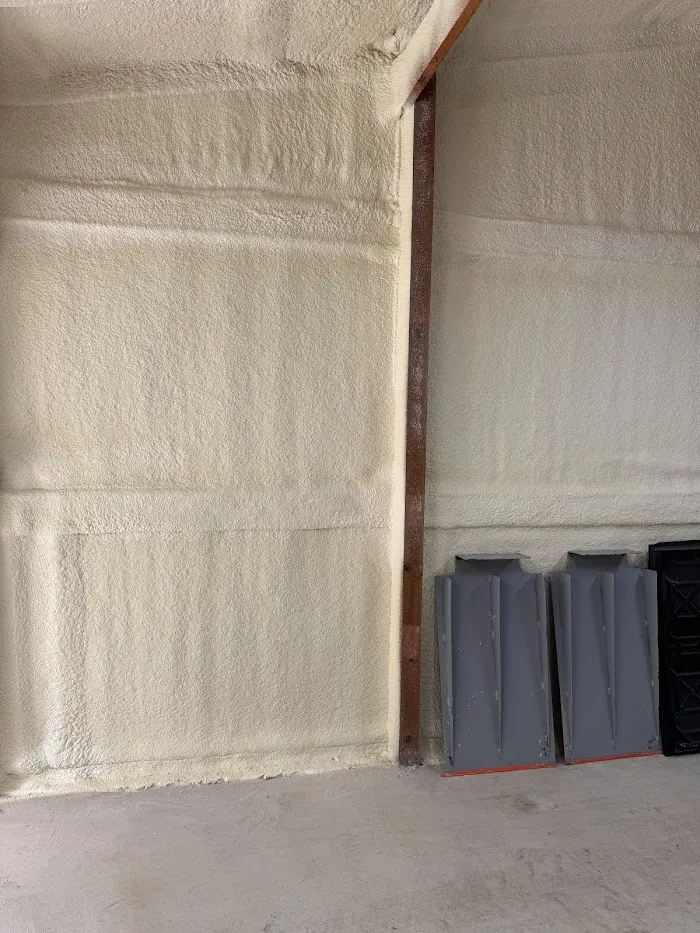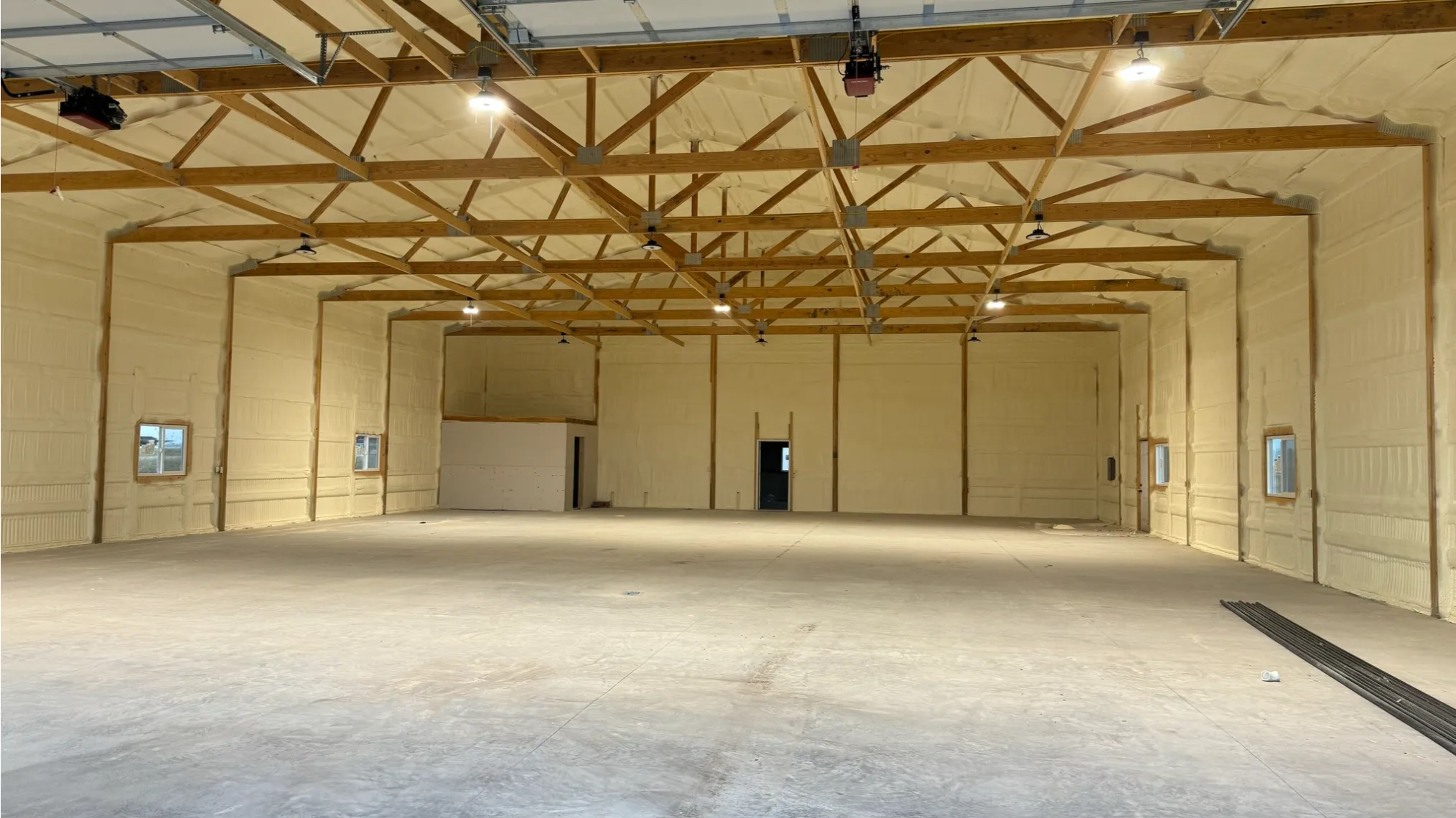
What is the Real Cost of Closed-Cell Spray Foam Insulation in Kalispell Homes
Closed-cell spray foam insulation in Kalispell homes costs between $1.00 and $1.25 per square foot per inch of thickness installed,…



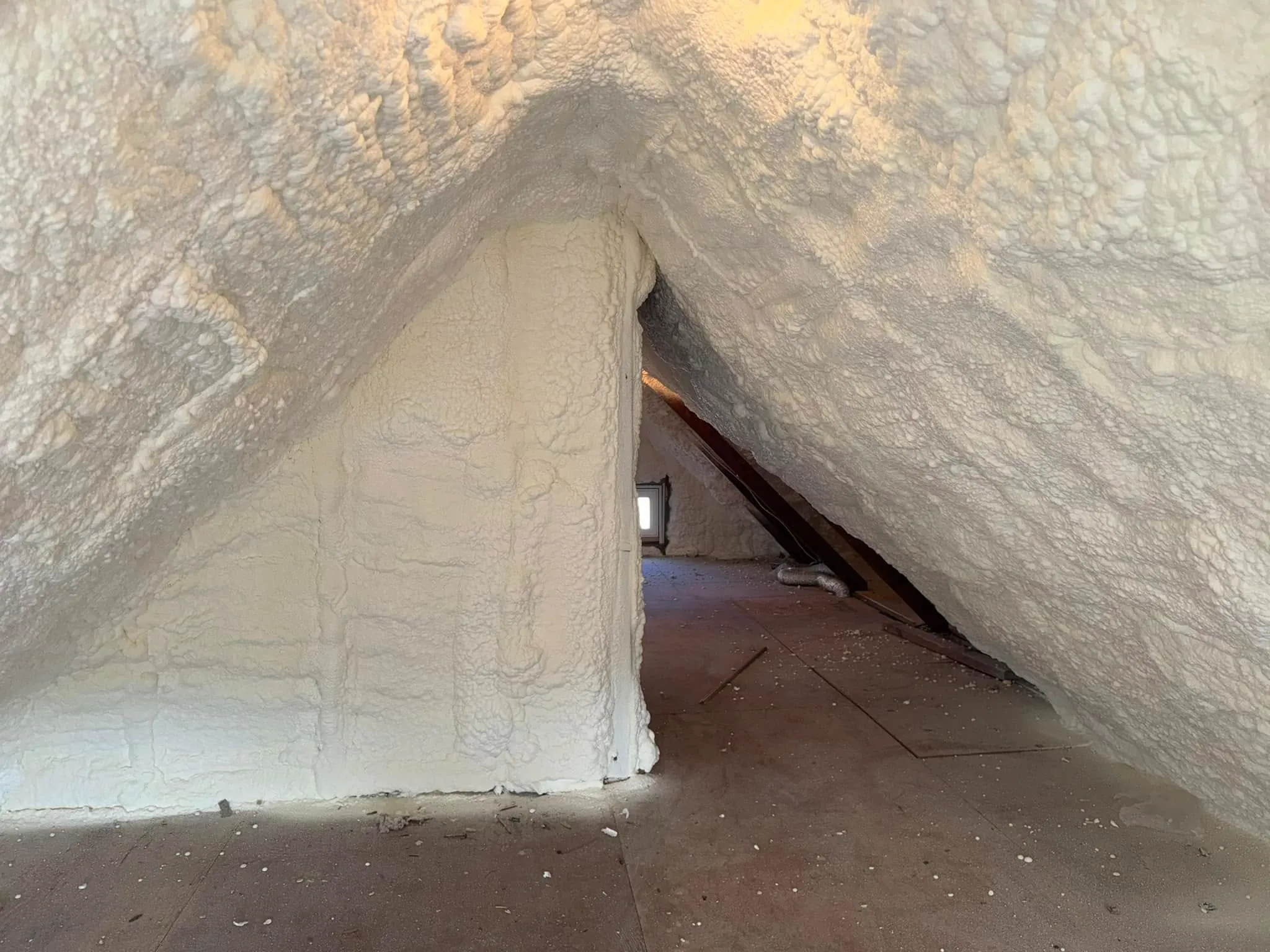
Open-cell spray foam insulation adapts to a home’s structure by expanding rapidly up to 100 times its liquid volume immediately after application, allowing it to fill custom shapes, framing irregularities, and hard-to-reach crevices that traditional materials cannot cover. Unlike rigid insulation boards or pre-cut fiberglass batts, the cellular structure of open-cell foam remains soft and flexible after curing. This elasticity permits the insulation to move with the building as lumber settles, expands, or contracts due to seasonal temperature changes, maintaining a continuous air seal without cracking or separating from the framing.
The ability to create a custom-fit thermal barrier on site resolves one of the most persistent issues in construction: air leakage through gaps. Framing lumber is rarely perfectly straight, and odd-shaped cavities created by plumbing, wiring, or architectural details often compromise the performance of standard insulation. By shifting from a “cut-to-fit” approach to a “spray-in-place” application, homeowners achieve a monolithic envelope that works with the structure’s physics rather than fighting it.
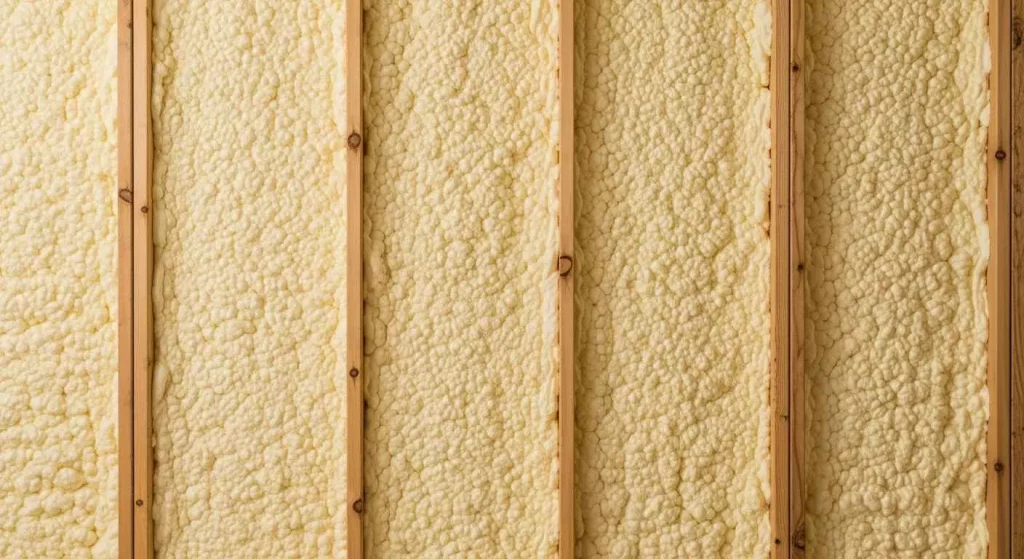
The adaptability of open-cell foam starts at the chemical level. When the two-component liquids mix at the nozzle, a reaction occurs instantly. The mixture hits the wall cavity and billows outward, forcing its way into gaps as small as a hairline. This behavior is distinct from closed-cell foam, which is denser and expands less vigorously. A technical review by the Spray Polyurethane Foam Alliance explains that low-density open-cell foam provides superior sound control and air sealing in interior wall cavities due to its high expansion rate.
Because the foam adheres directly to the substrate (studs, sheathing, or drywall), it eliminates the space where condensation often forms. Traditional insulation usually leaves small pockets of air between the material and the stud. These pockets allow air to circulate, which reduces thermal efficiency (R-value). Open-cell foam removes this variable by becoming part of the wall assembly itself.
Bonus Tip: During application, professional installers often spray slightly past the stud face, then use a curry comb or a saw to shave the excess flush. This “scarfing” process ensures the drywall sits perfectly flat against the studs while the cavity remains 100% full.
Houses are not static objects. They shift, settle, and breathe. New lumber shrinks as it dries, and older homes move with soil fluctuations. Rigid insulation materials, such as polystyrene board or cured closed-cell foam, are strong but brittle. If a house settles significantly, rigid materials may crack or pull away from the framing, breaking the air seal and allowing drafts to enter.
Open-cell foam possesses a sponge-like quality. If the framing shifts, the foam compresses or flexes rather than snapping. This characteristic is particularly valuable in attics and cathedral ceilings, where roof trusses experience extreme heat expansion in summer and contraction in winter. Data published by Building Science Corporation indicates that maintaining flexibility in the thermal boundary is essential for long-term air barrier performance in climates with significant temperature swings.
The following table illustrates how open-cell foam compares with other common insulation types in terms of structural adaptability and movement tolerance.
| Feature | Open-Cell Spray Foam | Fiberglass Batts | Rigid Foam Board | Closed-Cell Spray Foam |
|---|---|---|---|---|
| Expansion Ratio | High (~100x) | None (Pre-formed) | None (Pre-formed) | Medium (~30-40x) |
| Flexibility | High (Soft, spongy) | High (Soft, fibrous) | Low (Rigid, brittle) | Low (Rigid, dense) |
| Gap Filling | Excellent (Expands to fit) | Poor (Requires precise cutting) | Poor (Requires taping/sealing) | Good (Expands to fit) |
| Settling Over Time | Negligible | Moderate (Can sag/slump) | None | Negligible |
| Air Barrier Creation | Yes (Built-in) | No (Permeable to air) | Yes (If seams are taped) | Yes (Built-in) |
Modern homes often feature complex architectural designs, including vaulted ceilings, dormers, and intricate rooflines. These features create odd-shaped voids that are difficult to insulate with rectangular products. Attempting to stuff a square fiberglass batt into a triangular eave often compresses the batt, significantly reducing its R-value.
Open-cell foam excels here because it is fluid-applied. It flows around cross-bracing, electrical wires, plumbing pipes, and ductwork before settling. This creates a gasket-like seal around penetrations that would otherwise be significant sources of energy loss. A Department of Energy report highlights that air leakage can account for up to 40% of a home’s heating and cooling energy loss, underscoring the significant role spray foam’s complete coverage plays in energy conservation.
These efficiency gains drive the demand for high-performance insulation. According to a Grand View Research market analysis, the spray foam market is projected to grow significantly as building codes increasingly demand tighter building envelopes that traditional materials struggle to achieve without extensive labor for air sealing.

A common misconception is that “airtight” means the house cannot “breathe.” In building science, “breathing” refers to vapor diffusion, not air leakage. Open-cell foam is vapor-permeable. If water leaks into the wall assembly (perhaps from a damaged roof shingle), the open-cell structure allows the moisture to dry inward toward the conditioned space.
Closed-cell foam is a vapor retarder and can trap water against the wood sheathing if not installed correctly, potentially leading to rot in the structural framing. On roof decks in many climates, open-cell foam allows the wood sheathing to dry out, providing a layer of protection for the roof’s structural integrity.
Bonus Tip: When insulating a roof deck with open-cell foam, many professionals recommend installing a “chute” or maintaining an air gap if the roofing material requires ventilation. However, unvented attic assemblies are common and code-compliant in many zones.
While open-cell foam offers superior adaptability, it is not the universal solution for every part of a home.
Open-cell spray foam provides a solution that physically mimics the needs of a residential structure: it is dynamic, continuous, and protective. By conforming to a house’s unique geometry and moving with its natural shifts, it ensures that the energy efficiency calculated on paper translates into actual performance in the walls. Homeowners considering this upgrade should consider the age of their home, the complexity of the framing, and their climate zone to determine whether the flexibility of open-cell is the right fit.
Choosing the proper insulation requires assessing the property’s specific architecture. Wegner Insulation guides how different materials interact with building structures. For specific questions about an upcoming project or to discuss the suitability of open-cell foam for a home, Anthony can be reached directly at [email protected]. The team is also available at (406) 654-4636 to discuss technical specifications and installation procedures.
Yes. The foam envelops the wires completely. It does not react chemically with wire insulation (Romex). Since the foam blocks airflow, it prevents the heat buildup that can occur in oversized, empty cavities, though wires should be rated for encapsulated use.
Spray foam is an inert plastic once cured. It does not sag, settle, or degrade over time like cellulose or fiberglass. Unless mechanically removed or exposed to UV light (sunlight), it lasts the life of the building.
Foam does not provide food value to rodents or insects. Because it seals the tiny gaps where pests typically enter, it often acts as a deterrent. However, it is soft enough that a determined rodent could chew through it, so exterior barriers are still necessary.
Yes, open-cell foam adheres well to metal. However, surface preparation is vital to ensure adhesion, and condensation control must be calculated to prevent rust on the metal skin.