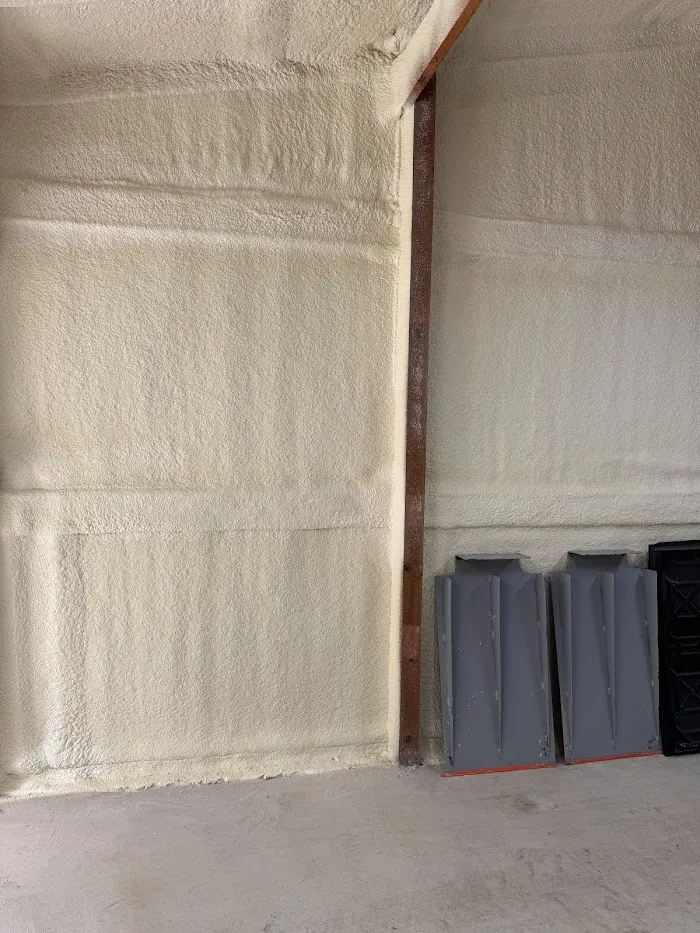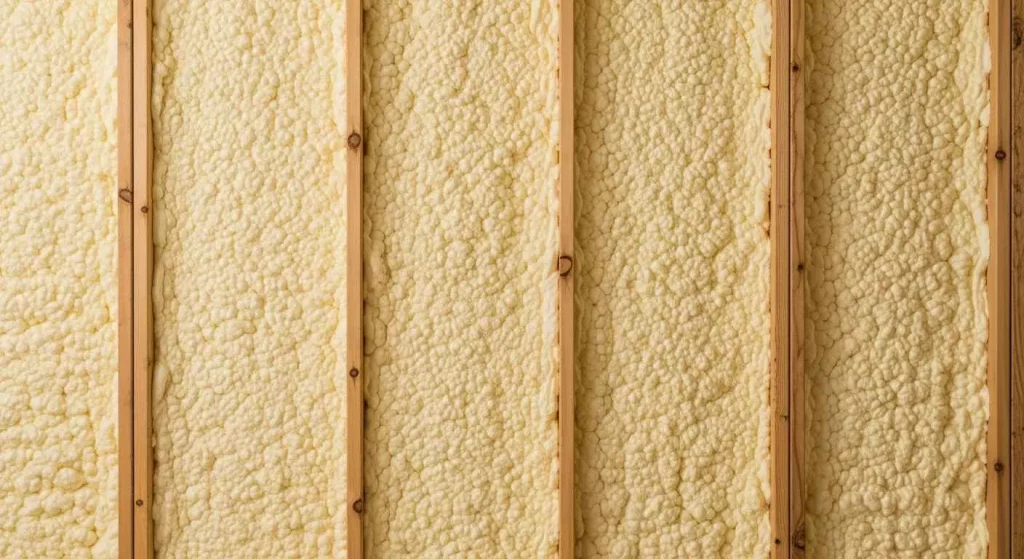
What is the Real Cost of Closed-Cell Spray Foam Insulation in Kalispell Homes
Closed-cell spray foam insulation in Kalispell homes costs between $1.00 and $1.25 per square foot per inch of thickness installed,…



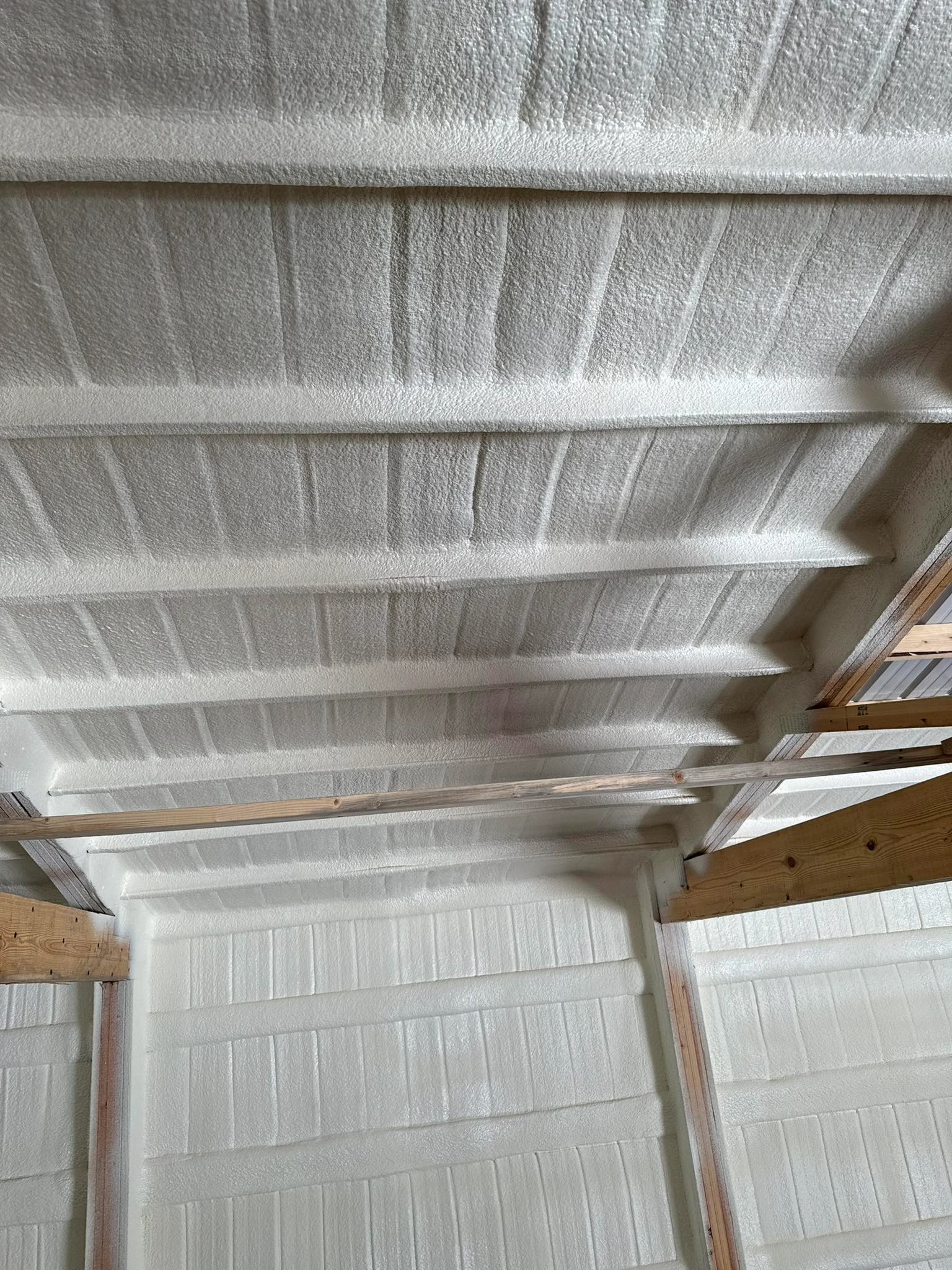
Closed-cell spray foam insulation resists odor absorption because its cellular structure creates an impermeable barrier that traps air in sealed pockets, while cellulose consists of porous paper fibers that naturally absorb and retain moisture, particles, and odors like a sponge. The chemical composition of spray foam also makes it chemically inert and non-organic, preventing the conditions that lead to odor retention.
This article explains the scientific differences between these insulation types, examines real-world performance scenarios, and provides practical guidance for homeowners dealing with odor concerns. Drawing from extensive field experience with both materials, the information helps you understand how insulation choice affects indoor air quality long after installation.
Odor absorption fundamentally comes down to material composition and structure. Materials that are porous and organic naturally attract and hold odors because they provide surface area and chemical environments where odor-causing compounds can lodge and remain. Cellulose insulation, made from recycled paper products, contains countless microscopic pores and organic compounds that actively attract and retain various odor molecules.
The cellular structure of cellulose resembles a dense network of paper fibers, each with grooves and crevices where particles can embed. When odors enter a space, these compounds seek out surfaces where they can adhere. Cellulose provides thousands of times more surface area per cubic foot than closed-cell foam, making it essentially a magnet for odors.
Bonus Tip: Over time, cellulose can develop musty smells when exposed to even minimal moisture, as the organic material begins to break down and support microbial growth. This process accelerates in humid climates where moisture levels fluctuate.
Closed-cell spray foam consists of tiny plastic cells completely sealed off from each other, creating a solid matrix with extremely low permeability. According to the U.S. Department of Energy, closed-cell foam has a permeability rating of less than 0.1 perm, making it one of the most effective moisture and vapor barriers available in insulation materials.
The manufacturing process combines polyol resin and isocyanate, which expand and cure into a rigid plastic structure. This chemical reaction creates an essentially inert material – it doesn’t react with most compounds it contacts, including common household odors from cooking, pets, or cleaning products. The sealed cells also prevent air movement through the insulation, eliminating the primary pathway for odor transport.
A study from the Applied Science journal demonstrated that closed-cell spray foam maintains its structural integrity and odor resistance even after decades of exposure to various airborne compounds. The research specifically noted the material’s resistance to absorbing volatile organic compounds (VOCs) that commonly cause persistent household odors.
Cellulose insulation starts as recycled paper products that are shredded and treated with fire retardants. While environmentally friendly, this organic origin makes cellulose susceptible to odor absorption through several mechanisms. The paper fibers contain lignin and cellulose compounds that naturally interact with various molecules in the air.
The treatment process adds borates or sulfates for fire resistance, but these chemicals don’t prevent odor absorption. In fact, they can sometimes contribute to chemical odors, especially when the insulation gets damp. Market research from IBISWorld shows that cellulose accounts for approximately 25% of the insulation market, largely due to its cost advantages, but its odor-related limitations are well documented in industry circles.
Cellulose’s tendency to settle over time also creates gaps and voids that promote air movement, allowing odors to penetrate deeper into the insulation layers. Once absorbed into the fibers, odors can be extremely difficult to remove without replacing the material entirely.
| Property | Closed-Cell Spray Foam | Cellulose Insulation |
|---|---|---|
| Vapor Permeability | Less than 0.1 perm | 30-50 perm |
| Odor Absorption Rate | Negligible | High |
| Response to Moisture | Resists water absorption | Absorbs moisture readily |
| Air Leakage Control | Forms a complete air barrier | Allows air movement through the material |
| Long-term odor resistance | Excellent | Poor to fair |
| Material Composition | Synthetic polymer | Organic paper fibers |
Bonus Tip: In homes with known odor issues like pets, smoking, or cooking-heavy environments, the insulation choice becomes particularly important for long-term indoor air quality management.
Climate plays a significant role in insulation performance regarding odor issues. In humid regions like the Southeast, cellulose’s moisture absorption properties can lead to mold growth and musty odors within months of installation. Conversely, in dry climates like the Southwest, cellulose performs better odor-wise but still retains any odors that do penetrate the material.
Existing odor problems in your home should heavily influence your insulation choice. If you’re dealing with persistent pet odors, musty smells, or chemical sensitivities, closed-cell spray foam provides the superior solution for containing and preventing odor recurrence.
The installation process itself affects long-term odor performance. Poorly installed cellulose often leaves gaps and voids that create air channels for odor transport. Even professionally installed cellulose can’t match the complete air sealing that spray foam naturally provides during application.
Northern regions with extreme temperature variations benefit particularly from closed-cell spray foam’s ability to prevent moisture migration during freeze-thaw cycles. The International Energy Agency reports that homes in cold climates lose up to 40% of their heating energy through air infiltration, making spray foam’s air sealing properties especially valuable beyond just odor prevention.
Coastal areas present another challenge where salt air and high humidity combine to create persistent odors. Cellulose in these environments often develops characteristic salty or musty smells within a year or two of installation, while spray foam maintains its odor-resistant properties indefinitely.
Mountain regions with significant daily temperature swings can also benefit from spray foam’s stability. The material’s resistance to air movement prevents chimney effects where odors from lower levels migrate upward through insulation cavities, a common problem in multi-story homes.
Closed-cell spray foam’s superior odor resistance comes from its sealed cellular structure and synthetic composition, which create an impermeable barrier against odor penetration. Cellulose’s organic, porous nature makes it naturally prone to absorbing and retaining odors, especially when exposed to moisture. While spray foam involves higher initial costs, its long-term performance in preventing odor problems often provides better value over the life of your home.
For homeowners dealing with existing odor issues or wanting to prevent future problems, spray foam offers the most reliable solution. Evaluate your specific situation – including climate, existing odors, and budget – when making your insulation decision. The right choice now prevents costly odor remediation projects later.
Wegner Insulation provides detailed evaluations to help determine the best insulation solution for your specific home environment and odor concerns. Professional assessment considers your home’s unique characteristics, local climate challenges, and indoor air quality goals. For expert guidance on insulation choices, contact Wegner Insulation at [email protected] or call (406) 654-4636 to schedule a comprehensive home evaluation.
Closed-cell spray foam typically costs 2-3 times more per square foot than cellulose initially. However, considering longer lifespan and reduced need for replacement, the lifetime cost difference often narrows significantly.
Removal is recommended rather than overlay. Installing spray foam over cellulose traps moisture between layers and prevents proper foam adhesion to surfaces, compromising both materials’ performance.
After the initial curing period, properly installed spray foam becomes chemically inert. Research shows no significant off-gassing after the first few days, making it safe for residential applications.
Cellulose typically offers better sound dampening due to its density and fibrous structure. However, spray foam’s air sealing properties can reduce sound transmission through air gaps that cellulose doesn’t address.